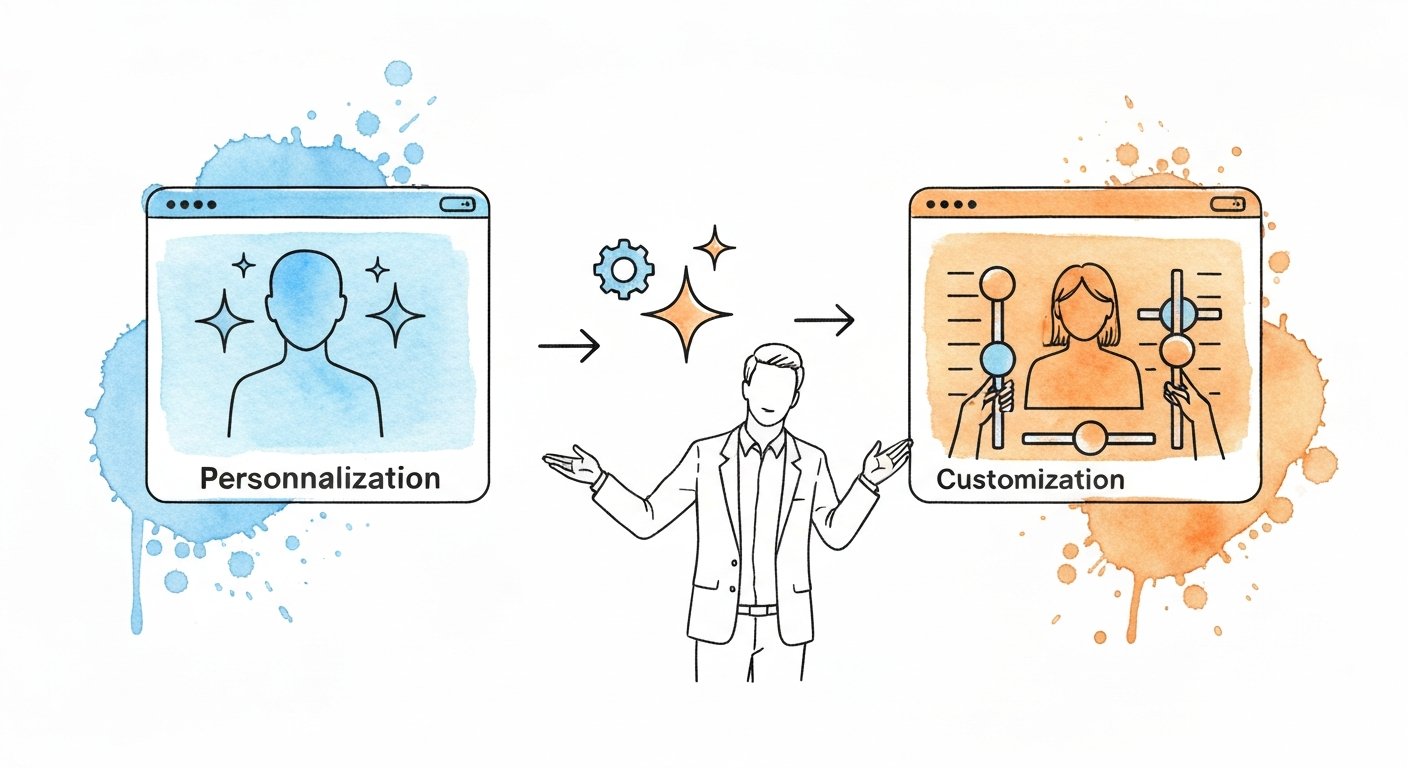
It’s one of the most common mix-ups in marketing and product development: personalize vs. customize. While they sound similar, the core difference is incredibly simple. Personalization is done for you by the system, while customization is done by you, the user.
One is about anticipating your needs, the other is about giving you the controls to express them.
Understanding The Core Difference: Personalization vs. Customization
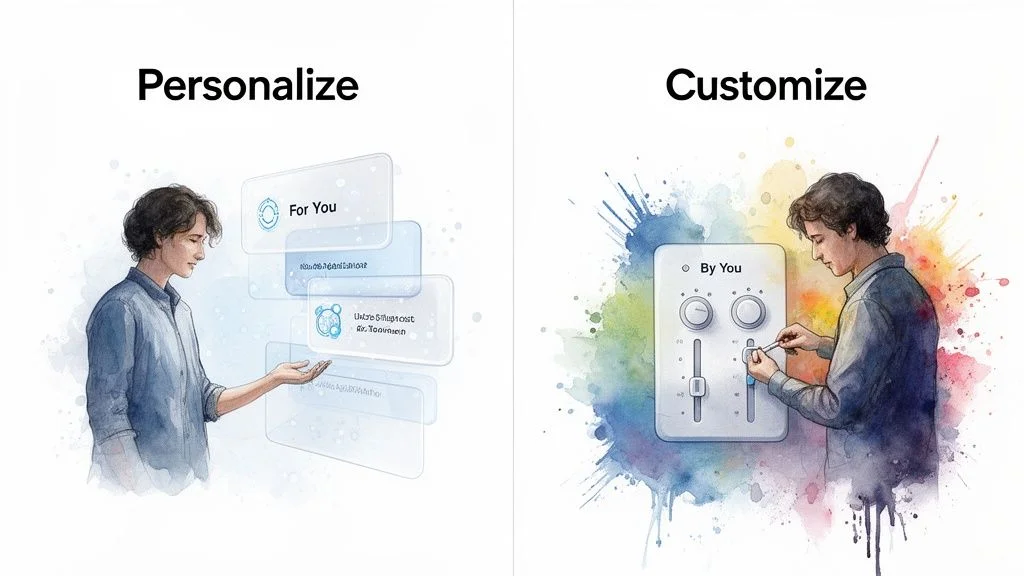
People often use these terms interchangeably, but they are two completely different strategies. Getting this right is critical because it impacts everything from the tech you buy to the team you hire—and even how much work you ask your customers to do.
Personalization is the proactive, almost invisible magic that makes an experience feel unique. It runs on implicit data (your browsing behavior, purchase history, location) to automatically show you the right content. Think of how Netflix serves up show recommendations based on what you’ve watched, or how Amazon suggests products related to your recent searches. The system does all the heavy lifting to create a smooth, intuitive experience.
Customization, on the other hand, is all about handing the keys over to the user. It’s a manual process that relies on explicit data, meaning the user has to tell you exactly what they want. This happens every time you switch an app to dark mode, choose your own news topics in a feed, or configure the layout of a project management tool. The user is in the driver's seat.
The key distinction lies in who initiates the action. Personalization is initiated by the system to serve the user, while customization is initiated by the user to serve themselves.
This isn't just a minor detail; it has huge strategic implications. Personalization is built to scale, using AI to make millions of users feel like they're getting a one-on-one experience. Customization gives users a powerful sense of ownership but can also introduce friction by forcing them to make decisions.
To break it down even further, here’s a quick side-by-side look at what defines each approach.
Personalization vs. Customization at a Glance
This table offers a high-level comparison of the core attributes that separate personalization from customization. It helps clarify who is doing the work and what kind of data is being used.
| Attribute | Personalization (For You) | Customization (By You) |
|---|---|---|
| Who Acts? | The system or application | The user |
| Data Source | Implicit (e.g., behavior, location) | Explicit (e.g., user selections, settings) |
| Process | Proactive and automated | Reactive and manual |
| Core Goal | Anticipate needs and reduce effort | Provide control and enable choice |
Ultimately, one isn’t inherently better than the other. The best digital experiences often find a way to blend both, using personalization to reduce friction and customization to empower users.
Which Strategy Drives Scalable Business Growth?
When it comes down to it, the big question is simple: which approach—personalization or customization—actually leads to sustainable growth? The right answer really hinges on your business model, how much traffic you get, and what your revenue goals look like. Each one affects the bottom line in a totally different way.
For most high-traffic SaaS and e-commerce companies, personalization is the undeniable engine for scalable growth. It uses AI to automatically create relevant experiences for thousands, or even millions, of users at once. You simply can't do that manually. This automation is what delivers a faster, more significant return on your investment.
Instead of making users do the work of setting up their experience, personalization gets ahead of them. It predicts what they need based on their behavior, making it easier to find products and reducing friction. The impact is huge.
Companies that get personalization right generate 40% more revenue from it than their average peers. In e-commerce, it can lift sales by 20%, and 59% of shoppers report that it's easier to find interesting products in a personalized store. You can dig into more data-driven retail personalization stats to see the full picture.
This works because personalization taps directly into the things that drive conversions. When you show someone the right product or the perfect offer at just the right moment, you eliminate hesitation and clear the path to purchase.
The Power of Automated Relevance
Personalization shines because it’s built on automation and real-time data. Think of it as a "set it and forget it" strategy, but in the best way. The system is always learning and adapting to user behavior on its own, without you needing to step in.
Here’s how that scalability pays off:
- Reduced Friction: By anticipating what a user wants next, personalization cuts down on the number of clicks and decisions they have to make. This creates a much smoother journey, which is absolutely critical for keeping momentum in a sales funnel.
- Increased Average Order Value (AOV): Smart recommendation engines are a classic example of personalization in action. They suggest relevant add-ons and upsells based on what a user is already looking at or has bought before. It's a proven way to get more value out of every single transaction.
- Massive Scalability: An AI-driven personalization system can serve a unique experience to every single visitor, whether you have a hundred people on your site or a million. This allows you to maintain that one-to-one feeling, even as your business grows exponentially.
Customization and Its Niche Victories
On the other side of the coin, customization drives growth in a completely different way. It’s the star player in markets with high-value, complex products where getting the user to invest time in the setup is actually part of the appeal. Think about configuring a brand-new car, designing a custom piece of furniture, or setting up a complex dashboard for enterprise software like Salesforce.
In these scenarios, letting a user "make it their own" builds a powerful sense of ownership and can easily justify a higher price. The trade-off, however, is that this depth often comes at the cost of speed and scale. Sales cycles can be much longer and the path to conversion is more involved, which isn't ideal for businesses focused on driving high-volume sales quickly.
So, if your main goal is to lift conversions immediately and grow revenue across a large audience, personalization has a clear edge. Its automated, data-driven approach makes it the smarter choice for the vast majority of modern digital businesses.
Building Lasting Customer Loyalty and Retention
Sure, getting that first sale is important, but the real win is turning a new buyer into a loyal fan who keeps coming back. When you start thinking about building long-term relationships instead of just one-off transactions, the difference between personalization and customization really comes into focus. One builds a solid foundation for loyalty, while the other gives you a strong, but often temporary, boost.
When you pit them against each other for retention, personalization almost always comes out on top. It builds deeper, more sustainable relationships by making customers feel seen and understood time and time again. That creates an emotional connection that a static set of options just can't match.
It's not just a nice-to-have anymore. Globally, 73% of customers expect companies to get their unique needs, and a staggering 93% of shoppers are more likely to stick with brands that deliver excellent personalization.
This isn't a minor trend; it’s a major shift in customer expectations. People don't just like a tailored experience—they demand it. The constantly evolving nature of personalization is what nurtures that bond over time, turning one-time buyers into your biggest advocates. Building that credibility starts well before the first purchase — see how to build trust with customers for the full playbook.
How Personalization Nurtures Sustainable Loyalty
The magic of personalization is that it’s always learning. It works by getting smarter with every single interaction. Each click, search, or purchase helps refine how your system responds to that customer next time. Think of it as an ongoing conversation that makes them feel genuinely valued.
This approach directly fuels long-term engagement in a couple of key ways:
- It creates a feeling of being understood. Instead of making users tell you what they want, personalization shows them you already have a good idea. This sense of recognition is powerful—it builds trust and gives them a great reason to come back.
- The experience actually gets better over time. The more a customer engages with your brand, the more tailored their experience becomes. This creates a fantastic feedback loop where their loyalty is rewarded with even better service, making it that much harder for a competitor to tempt them away.
Of course, for any of this to work, you need to be gathering the right behavioral data from the start. Our guide on collecting visitor information walks you through how to nail this crucial first step.
The Limits of Customization for Retention
Customization, on the other hand, gives users a great initial feeling of control. Letting them build their own product or set up a dashboard exactly how they want it creates instant buy-in and a sense of ownership. But this feeling can have a surprisingly short shelf life.
Once the setup is done, the experience is frozen in time. That customized product doesn't change as the user's needs or tastes evolve. It’s stuck reflecting a choice they made in the past, so it quickly loses the ongoing relevance that personalization delivers so well.
If you want to know what's really working, you have to track the right customer retention metrics. The numbers don't lie: personalization is a beast when it comes to keeping customers around. In fact, 62% of business leaders say it directly improves customer retention. There are plenty of other compelling marketing personalization statistics out there that prove its impact on the bottom line.
Choosing Your Approach for Immediate Conversions
When you need action right now—a sale, a signup, a click—your choice between personalization and customization becomes much clearer. If your goal is all about the speed of conversion, one of these strategies is built for the job.
For most online stores and lead generation campaigns, personalization is the undisputed champion for getting quick wins. It works by cutting out the noise and showing visitors exactly what they’re interested in, at the very moment they show that interest. The best part? It requires zero effort from them. This is incredibly powerful when you're launching a new product or trying to get webinar signups, where capturing that "in-the-moment" intent is everything.
The Friction of Choice vs. The Speed of Relevance
Think about it this way: customization asks the user to make a series of decisions. While this gives them a great sense of control, it also adds steps and potential hesitation to their journey. Every option, from picking a color to adding a feature, is a moment where they can pause, get distracted, and slow down.
Personalization does the exact opposite. It clears the path. By using real-time behavioral data, it anticipates what a visitor wants and serves it up on a silver platter. This might look like a product recommendation based on their clicks or a perfectly timed pop-up that answers a question right before they think about leaving their cart.
The difference is simple. Customization asks, "What do you want to build?" Personalization says, "Here is what you need right now." The second approach is a much faster path to a conversion.
This predictive ability is why personalization consistently drives more immediate sales. Research has found that while 81% of consumers will flat-out ignore messages that aren't relevant, a staggering 96% are more likely to buy from brands that send them personalized offers. Businesses that nail this strategy often see a 10-15% lift in revenue. For more tactics on moving visitors from interest to action, see our guide on how to increase website conversion rate.
On the flip side, while 59% of shoppers say they're more likely to buy if customization is an option, 48% also admit they're willing to wait longer for those custom items. This highlights that customization often appeals to a less urgent buyer.
This decision tree breaks down how your core goal, whether it's user control or better retention, should guide your strategy.
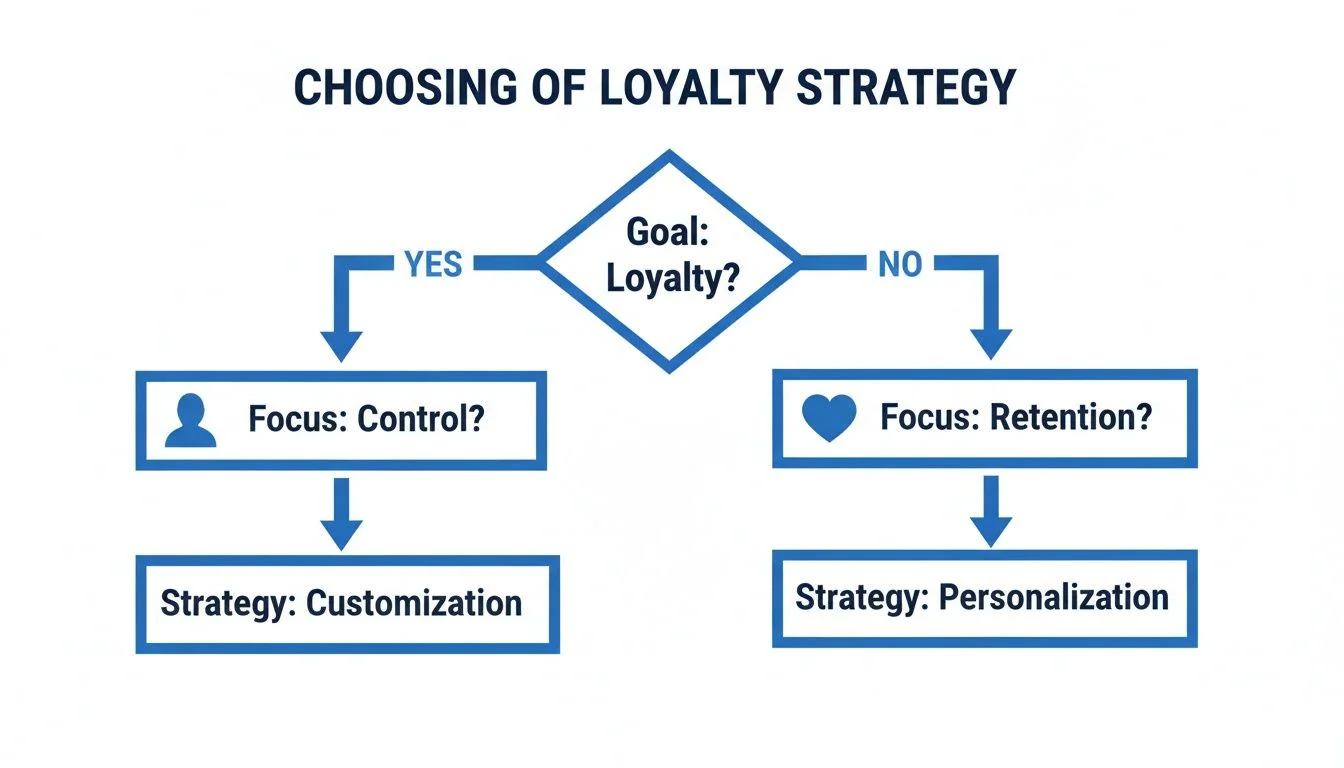
As the chart shows, if you're chasing immediate action and long-term loyalty, the road is paved with relevance—and that’s the domain of personalization.
Putting It Into Practice with FOMOchat
Today's AI-powered tools make it surprisingly easy to put personalization into action. For instance, with a FOMOchat widget, you can show conversations that directly speak to the concerns of visitors who are currently looking at your pricing page. You’re personalizing the social proof by showing them that other people had the same questions and got the answers they needed.
This is a world away from a customization-first approach, where you might ask the user to pick their industry to see relevant case studies. That’s still useful, but it adds a click. For anyone focused on a quick win, personalization delivers relevance automatically. You can always offer users control over cosmetic things later, which we cover in our guide on customizing your widget’s appearance.
Combining Personalization and Customization for Maximum Impact
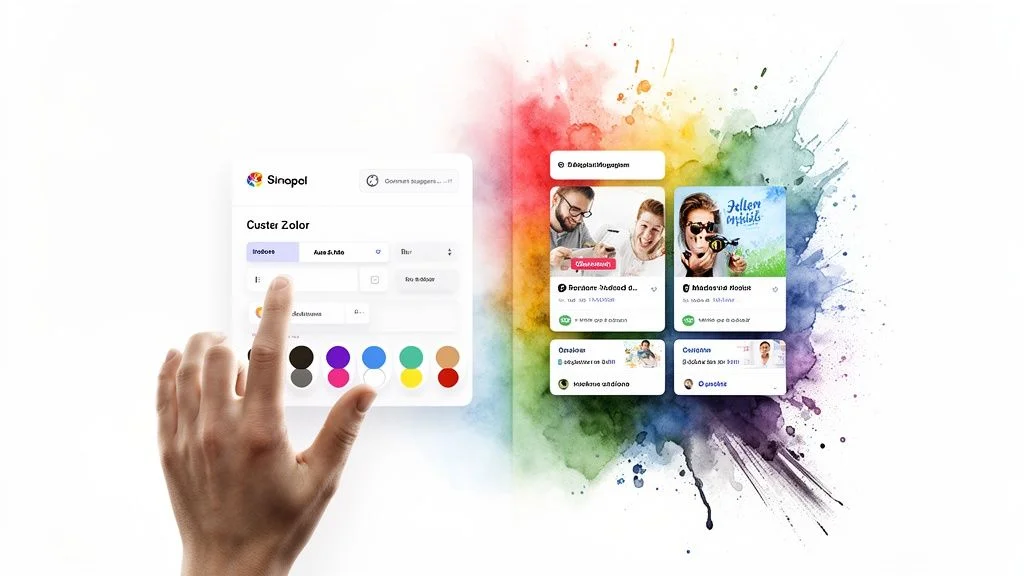
The whole debate over personalize vs customize is a bit of a red herring. The smartest digital experiences don't force you to choose one or the other. Instead, they build a hybrid model that pulls from the best of both. The idea is to give users control where they want it and use smart automation to make the rest of their journey feel effortless.
By blending them, you get a much stronger result. You can let people use customization to make a product feel like their product—aligning it with their brand or just their personal taste. At the same time, a personalization engine can be working quietly in the background, surfacing the right content or offers at just the right moment.
A Hybrid Strategy in Action
Let's look at a real-world example. Picture an e-commerce site that sells high-end, configurable laptops. A customer can customize their machine from the ground up, picking out the processor, bumping up the RAM, and choosing a specific screen size. This puts them in the driver's seat, gives them a sense of ownership, and ensures the final product is exactly what they need.
But here's where it gets interesting. While the user is busy customizing, the site is using personalization based on their choices. When they add a powerful graphics card to their build, the system automatically suggests a compatible high-resolution monitor during checkout. It doesn't make the customer go searching; it anticipates what they'll need next and makes a helpful, relevant offer.
The hybrid model works by drawing a line between user control and system intelligence. Users customize the core product to match their needs, while the system personalizes the surrounding experience to guide them to a better outcome.
This one-two punch is incredibly effective. It empowers people with choices that matter, all while taking the mental work out of navigating the rest of the site. The result is happier customers and a higher average order value.
How FOMOchat Blends Both Approaches
This dual strategy is exactly how we designed FOMOchat. We give you, the business owner, a ton of customization options, while our AI delivers a truly personalized experience to every person who visits your website.
Here’s a simple breakdown of how that works:
- Customization (For Your Business): As a business owner, you can customize everything about your FOMOchat widget's appearance. Change the colors, add your logo, and decide exactly where it sits on the page to make sure it’s a perfect match for your website's design and brand. You have total control over how it looks.
- Personalization (For Your Visitor): While the widget’s look is customized by you, its behavior is personalized for the visitor. The AI assistant automatically adapts its conversations based on what that specific person is doing, like which page they’re on or how long they’ve been browsing.
This means you can keep your branding tight and consistent through customization, while the AI is busy delivering a uniquely helpful experience to every visitor. By using both, you get more control over your brand and more relevance for your customers. To take it even further, you can check out our guide on improving AI responses to make your personalization even smarter.
How to Implement and Measure Your Strategy
So, you've decided on your approach. Now what? Turning a strategy into real-world results requires a solid plan for both execution and measurement. Whether you're leaning into personalization, customization, or a bit of both, knowing what to track from day one is everything.
If you’re going the personalization route, your absolute top priority is clean, dependable data. It’s all about defining the key behavioral triggers—things like pages visited, time spent on site, or what’s in a user's cart—and then using your tools to automatically analyze that data and act on it.
On the other hand, a customization strategy shifts your focus almost entirely to the user interface. Your job is to build intuitive options and easy-to-use configurators that empower users without frustrating them.
Measuring What Matters Most
This is where a lot of people get tripped up. The KPIs you track for personalization are completely different from the ones you use for customization. Measuring a customization effort with personalization metrics (or vice versa) will give you a skewed picture of your performance.
For Personalization: Success is all about the direct impact on your bottom line. You’re looking for a lift in conversion rates, an increase in average order value (AOV), and a boost to customer lifetime value (CLV). These KPIs tell you the system is correctly anticipating what users want and driving more revenue.
For Customization: Here, success is tied directly to how users engage with the choices you give them. You'll want to track metrics like configurator engagement time, the adoption rate of custom features, and how many users complete the setup process. This shows that people actually find value in the control you’re offering.
No matter which path you take, respecting user privacy is non-negotiable. Be upfront about the data you collect for personalization, and make sure any choices a user makes during customization are saved securely for their next visit.
For a deeper look at tracking your performance, check out our guide to understanding the analytics dashboard and what those key metrics really mean.
If you’re looking to get the best of both worlds, using advanced tools for dynamic content, like those that create an AI ad, can be incredibly powerful. Ultimately, a well-defined plan for implementation and measurement is what separates a good idea from a great strategy that actually works.
Frequently Asked Questions
Even after breaking down the differences, a few common questions always pop up when it's time to build a strategy. Let's tackle them head-on so you can move forward with confidence.
Can A Business Use Both Personalization And Customization?
Not only can you, but you absolutely should. The most powerful customer experiences don’t force you to choose; they blend both approaches seamlessly.
Think about it this way: a car manufacturer’s website might let you customize your dream car by picking the exact color, interior fabric, and wheel style. That’s you in the driver’s seat, making choices. At the same time, the site can personalize the experience by showing you financing offers based on your previous visits or highlighting the closest dealership with a similar model in stock. That’s the system anticipating your needs.
The real magic happens when you use customization to give users a sense of control and ownership, then use personalization to make their journey smoother and more relevant in the background.
Which Is More Expensive To Implement?
Honestly, the cost depends entirely on what you’re trying to build. A complex customization tool, like a 3D product configurator, can require a huge upfront investment in development. On the other hand, true personalization relies on a strong data pipeline and AI models, which can carry ongoing operational costs.
The good news is that modern SaaS platforms have made sophisticated personalization much more affordable. A tool like FOMOchat, for instance, gives you powerful AI-driven features right out of the box. This often means a lower barrier to entry and a quicker path to seeing a return compared to building a complex customizer from scratch.
Is Personalization The Same As Segmentation?
That’s a great question, and the answer is no—but they are related. The easiest way to think about it is that personalization is the next step up from segmentation.
- Segmentation is about grouping people into broad buckets based on shared characteristics. For example, you might create segments for 'new visitors,' 'repeat buyers,' or 'shoppers from the UK.' It’s a one-to-many approach.
- Personalization zooms in on a single person. It adapts the experience based on their specific actions, preferences, and real-time behavior. This is true one-to-one marketing.
While segmenting your audience is a solid first step, today's customers really expect the kind of relevance that only true personalization can deliver.
Ready to see how a hybrid approach can lift your conversions? FOMOchat combines powerful customization for your brand with AI-driven personalization for every visitor. Start your free trial today.