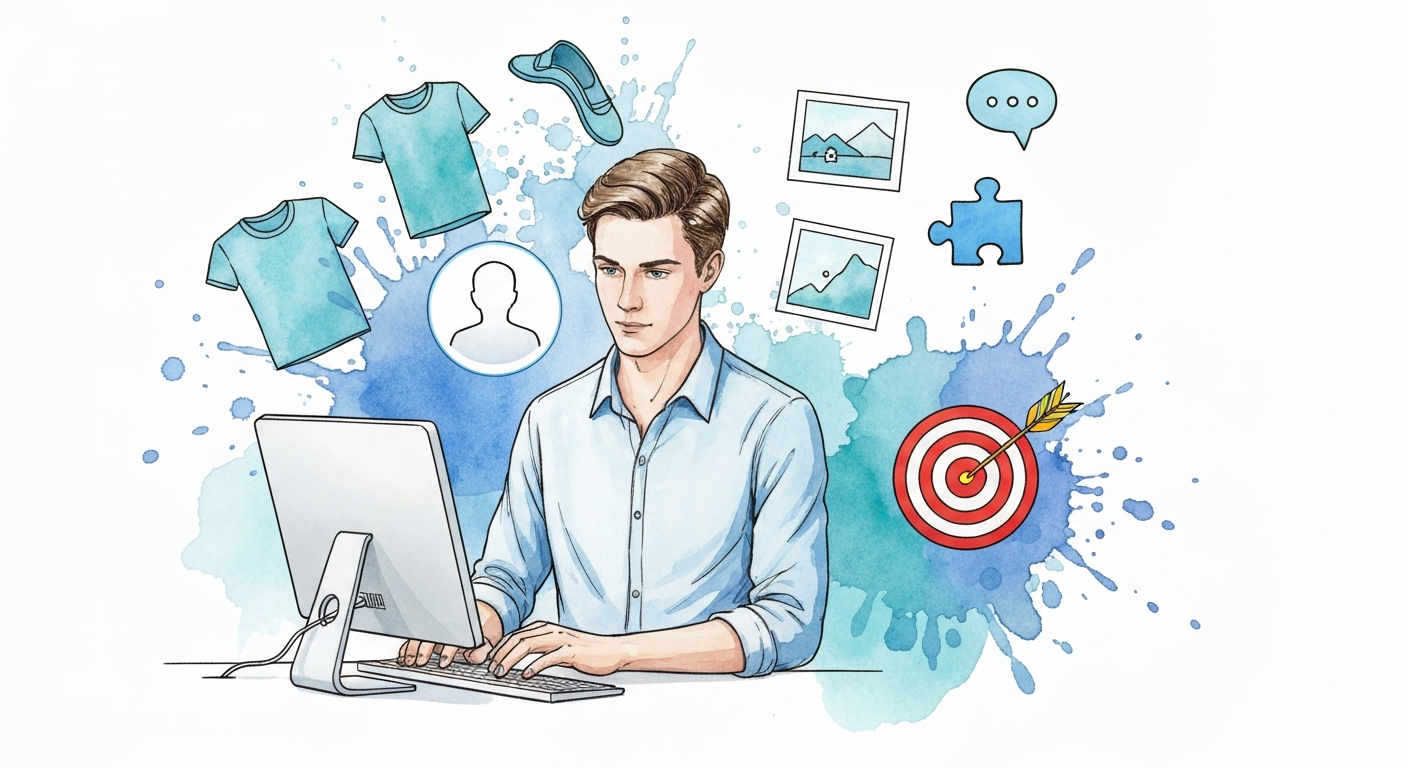

Content personalization is really just the art of talking to one person at a time, even when you're addressing thousands. It’s about swapping out that generic, one-size-fits-all message for something that feels tailor-made, based on their interests, past behaviour, and needs. Less broadcasting, more one-to-one conversation.
Why Personalized Content Is No Longer Optional
Ever been in a loud, crowded room where it’s impossible to focus on any single conversation? It’s all just background noise. But the second you hear someone say your name, your attention snaps right to them. That’s a real psychological phenomenon called the "cocktail party effect," and it perfectly explains why content personalization works so well.
Generic marketing is the equivalent of shouting into that noisy room. Most people will just tune it out. But personalized content is like leaning in and whispering something relevant directly to one person. It cuts through the chaos because it’s about them, their challenges, their goals, their world.
Customer Expectations Have Fundamentally Changed
These days, customers don't just prefer personalization; they demand it. The age of mass-market messaging and generic email blasts is over. Everyone is now accustomed to the hyper-relevant experiences served up by giants like Netflix, which seems to magically know your next binge-watch, and Amazon, which suggests products you were just thinking about.
That’s the new benchmark. People expect that same level of tailored interaction from every brand. In fact, 71% of consumers now expect companies to deliver personalized interactions, and a whopping 76% get frustrated when it doesn't happen. That frustration isn't just a minor annoyance; it’s a direct threat to your bottom line and brand loyalty. You can dig into more marketing personalization statistics to see the full impact on revenue.
The fastest-growing companies generate 40% more revenue from personalization. That gap is only widening. It's not a nice-to-have anymore.
This Is More Than Just a Passing Trend
For anyone in SaaS marketing, creating online courses, or managing a product launch, this shift is critical. It’s a complete evolution in how we build relationships and inspire action. When you get content personalization right, you see real, measurable results.
- Skyrocketing Engagement: Content that resonates gets more clicks, longer read times, and more shares.
- Higher Conversion Rates: Presenting the perfect offer to the right person at the ideal moment makes it easy for them to say "yes."
- Deeper Customer Loyalty: People stick with brands that "get" them. When customers feel understood, they become your biggest fans.
At its core, content personalization is about proving you see your audience as individuals, not just numbers on a dashboard. By meeting them where they are with content that genuinely helps them, you forge a connection that generic marketing could never achieve. This guide will walk you through exactly how to make that happen.
4 Core Strategies for Effective Content Personalization
Knowing why personalization works is one thing; knowing how to actually do it is where the magic happens. Let's get practical and break down the core strategies that turn a generic website visit into a meaningful conversation.
These methods aren't mutually exclusive. In fact, they build on each other, moving from simple, broad-stroke approaches to highly sophisticated, real-time adaptations. Each one helps you deliver the right message to the right person, just when they need it most.
Audience Segmentation: The Foundational Layer
The simplest and most essential starting point is audience segmentation. Picture it as sorting your audience into different buckets based on what they have in common. Instead of shouting one message to a crowd, you’re having smaller, more relevant conversations with distinct groups.
Segmentation isn't about creating thousands of unique messages. It's about acknowledging that a first-time visitor needs a different welcome than a loyal customer. It's knowing a startup founder cares about different features than a manager at a Fortune 500 company.
Common ways to segment your audience include:
- Demographics: Grouping by location, company size, or industry.
- Behavior: Segmenting based on pages they’ve visited, features they’ve used, or ebooks they’ve downloaded.
- Lifecycle Stage: Separating new leads from active customers or users who might be at risk of churning.
For a SaaS company: You could create a segment for "Startup Users" and another for "Enterprise Clients." The startup group might see a homepage highlighting affordability and quick setup. Meanwhile, the enterprise group sees content that speaks their language, security, scalability, and dedicated support.
Dynamic Content: Adapting on the Fly
Dynamic content takes segmentation to the next level. Instead of showing an entirely different page, you swap out specific elements, like a headline, a hero image, or a call-to-action button, based on who's looking.
It works with simple "if-then" rules. For instance, if a visitor clicks through from an ad about project management tools, your homepage headline can dynamically change to "The Ultimate Project Management Solution." This creates a consistent, connected journey that immediately confirms they're in the right place.
Dynamic content acts like a chameleon, subtly changing its appearance to match its environment. It meets the user's expectations by reflecting their known interests or origin, making the experience feel intuitive and helpful.
Dynamic content is a powerful conversion driver. A personalized call-to-action can make all the difference, and you can learn how to write a call to action that really connects with each audience segment.
Content Sequencing: The Guided Journey
While dynamic content reacts in the moment, content sequencing is about guiding someone over time through planned content. It’s the art of telling a story through a series of planned messages, where each piece of content logically follows the last. This works particularly well for nurturing leads and onboarding new customers.
It works like a good course curriculum. You don't jump into advanced calculus on day one. You start with basic algebra and build up from there. Content sequencing applies that same principle to your marketing.
A simple sequence might look like this:
- Awareness: A new visitor reads a blog post about a common problem in their industry.
- Consideration: A few days later, they get an email with a case study showing how your product solves that exact problem.
- Decision: Finally, they receive an invitation to a live webinar demonstrating the product's key features.
Methodical sequencing builds trust and educates your audience, gently moving them toward a decision without ever feeling pushy. This maps directly onto the conversion funnel stages: awareness, interest, consideration, action.
Real-Time Personalization: The Ultimate Experience
Real-time personalization is the most advanced strategy, where AI and machine learning adapt the user experience in milliseconds. Unlike other methods that rely on pre-set rules, real-time personalization analyzes a user's behavior during their session to predict what they want and deliver it instantly.
It processes data like clicks, mouse movements, and how long someone hovers over an image to understand their immediate intent. For an e-commerce site, if a shopper keeps returning to a specific product, the system might trigger a pop-up with a limited-time discount for that very item.
The result is a powerful feedback loop where a user's actions directly shape what they see next. For a course creator, this could mean showing a testimonial that addresses a specific concern a visitor just read about on the FAQ page. It’s the closest you can get to a one-to-one dialogue, but at scale.
To help you decide which approach is right for you, here’s a quick comparison of the four strategies.
Comparing Content Personalization Strategies
| Strategy | Complexity Level | Data Required | Best For |
|---|---|---|---|
| Audience Segmentation | Low | Basic demographic and behavioral data (e.g., location, industry, visit history). | Getting started with personalization; creating broad-stroke relevance for key groups. |
| Dynamic Content | Medium | Segmentation data plus real-time context (e.g., referral source, ad campaign). | Optimizing landing pages, email campaigns, and CTAs for higher conversion rates. |
| Content Sequencing | Medium-High | User journey and lifecycle data (e.g., content consumed, email engagement). | Nurturing leads, onboarding new customers, and guiding users through complex funnels. |
| Real-Time Personalization | High | Large volumes of real-time behavioral data, often powered by AI/ML platforms. | E-commerce, large SaaS platforms, and media sites looking to maximize engagement and sales. |
Each strategy has its place, and the best results often come from combining them. You might start with broad segmentation and gradually layer in dynamic content and thoughtful sequences as you gather more data and insight.
The Technology That Powers Modern Personalization
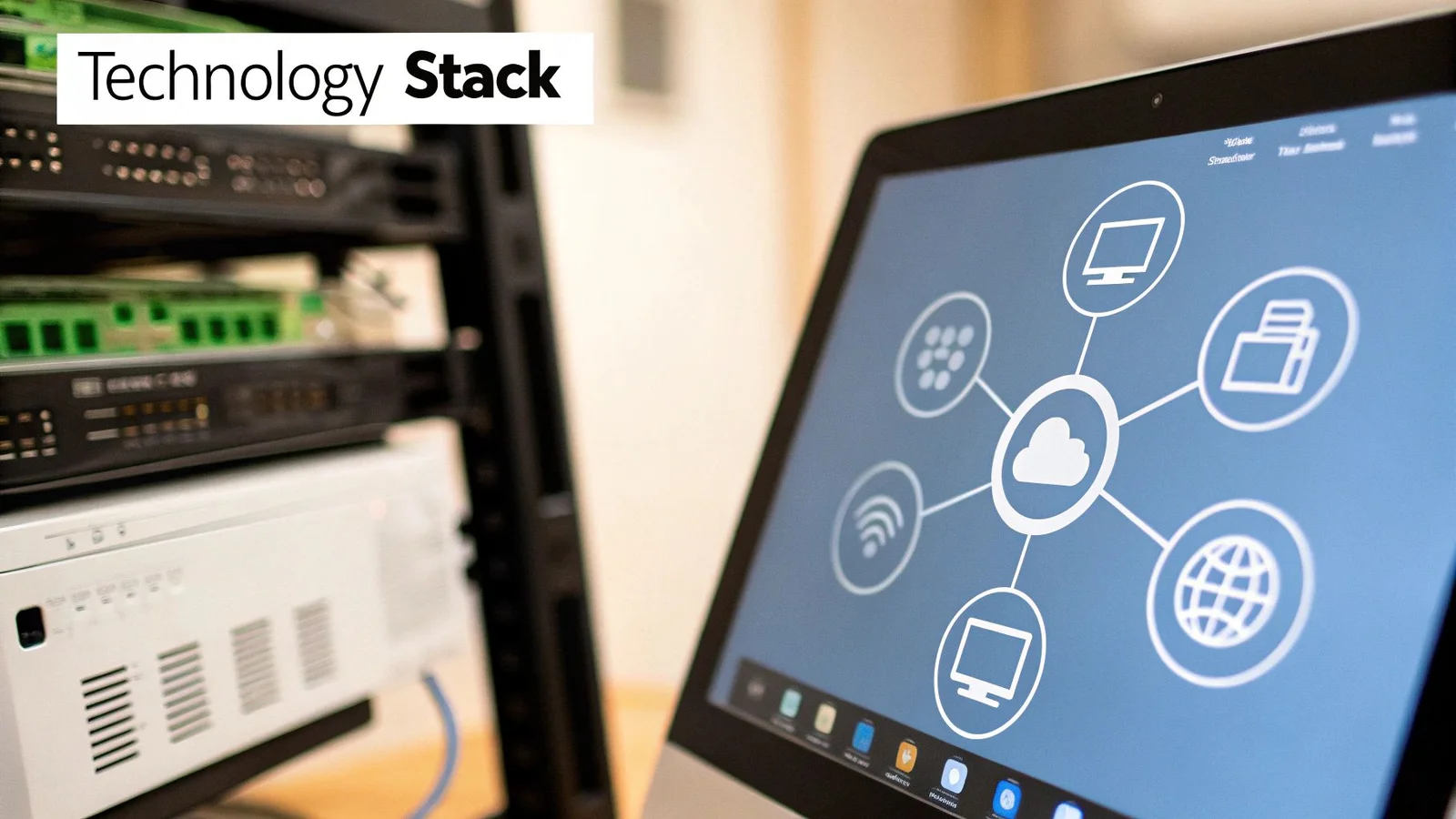
Delivering a truly personal experience isn't magic. It's actually a well-orchestrated system of technology working behind the scenes. Once you understand the key players in this tech stack, the whole process feels much less mysterious, giving you the confidence to pick the right tools for the job.
Picture it like building a custom car. You need a central chassis to hold everything together, a powerful engine to make it go, and a sleek body to present it to the world. In content personalization, these parts have different names, but they do very similar things.
Customer Data Platforms: The Central Brain
At the heart of any modern personalization strategy is the Customer Data Platform (CDP). This is the central 'brain' of your entire operation. Its main job is to pull in and unify customer data from every single touchpoint, your website, your app, your emails, everything, into one clean, coherent profile for each user.
A good CDP goes well beyond tracking website clicks. A good CDP also ingests data from your CRM, email marketing platform, support tickets, and even offline interactions. It stitches all those scattered pieces together to give you a complete picture of who your customer is and what they care about, finally solving that age-old problem of data silos.
A CDP acts as your organization's memory. It remembers every interaction, preference, and behavior, making it possible to have a continuous, intelligent conversation with each user, no matter where they engage with your brand.
With this unified view, you can build the rich, meaningful audience segments that great personalization depends on. It ensures that every decision is based on a complete and accurate understanding of your audience. Keeping tabs on this data is critical, and our guide to the conversion and analytics tracking guide can help you track the right performance indicators.
AI and Machine Learning: The Predictive Engine
If the CDP is the brain, then Artificial Intelligence (AI) and Machine Learning (ML) are the engine. These technologies sift through the mountains of data collected by the CDP, hunting for patterns and making smart predictions about what a user will do next. This is what separates basic segmentation from truly adaptive, real-time experiences.
AI doesn't just look at what a user has done; it predicts what they are likely to do next. That predictive power lets you automate decisions at a scale no human team could ever hope to manage.
Here’s how it works in practice:
- Product Recommendations: An ML model analyzes a user’s browsing history and compares it to thousands of similar users, then suggests products they're most likely to buy.
- Lead Scoring: AI can predict which leads are most likely to convert, allowing your sales team to focus their energy where it really counts.
- Content Optimization: It can figure out which headline, image, or offer will resonate most with a specific user segment and serve it up automatically.
No surprise the global personalization software market is exploding, it's projected to hit USD 5.14 billion by 2030. This growth is all thanks to AI's ability to shift brands from simply reacting to user behavior to actively shaping content based on real-time signals.
Execution Tools: The Delivery System
Finally, you need execution tools to actually deliver the personalized experience to the user. These are the platforms that take the instructions from your CDP and AI engine and make them visible on your website, in your emails, or inside your app.
Think of these tools as the "body" of the car, the user-facing part that delivers the final, polished experience. For many teams, implementing modern content personalization relies heavily on advanced solutions like dedicated webinar tools and on-site personalization engines, which helps you tailor content more efficiently for specific audiences.
Common execution tools include:
- Content Management Systems (CMS): Platforms like HubSpot or WordPress that can be configured to display dynamic content blocks.
- Email Service Providers (ESP): Tools like Mailchimp or ConvertKit that can send highly targeted email sequences.
- On-site Personalization Engines: Specialized software built to manage A/B testing and real-time content swaps on your website.
Together, these three pillars, the CDP, the AI engine, and the execution tools, form a powerful system. The CDP gathers the intelligence, the AI decides on the best message, and the execution tool displays it, creating a consistent, genuinely relevant journey for every single user.
Putting Personalization into Practice with Real Examples
All the theory and strategy in the world doesn't mean much until you see it work. The real magic of personalization of content happens when you move from spreadsheets and segments to creating tangible experiences that genuinely solve a user's problem.
So, let's get out of the abstract and into the practical. Below are three real-world playbooks designed for different types of businesses. Think of them as mini case studies showing how you can use personalization to boost sign-ups, nurture leads more effectively, and ultimately, drive more conversions.
SaaS Marketers: Dynamic Pricing Pages
For any SaaS business, the pricing page is the moment of truth. It's where a prospect's curiosity has to convert into a real financial decision. The problem is, a one-size-fits-all pricing grid is often a miss because different customers are looking for entirely different things.
Dynamic content was made for exactly this. The goal isn't to trick anyone, but to cut through the noise and instantly show a visitor the plan that makes the most sense for them.
The Playbook in Action:
- The Trigger: You can pull from firmographic data (like company size) and on-site behavior (which feature pages they visited). For example, you can tell if a visitor is from a small team of 1-10 people or a larger organization with 500+ employees.
- The Experience: When a visitor from a startup lands on your pricing page, the "Startup" plan is automatically highlighted. Maybe it gets a subtle glow, a "Most Popular for Teams Like Yours" badge, or even a different background color to make it pop.
- The Message: Even the headline can adapt. Instead of a generic "Our Pricing Plans," it could switch to "Plans Built for Fast-Growing Startups."
By simply making the most relevant option the easiest to see, you're acting as a helpful guide. You’re confirming that your tool is right for them and shortening their path to purchase. To get this right, you first need a solid foundation, and this guide on creating a personalized landing page is a great place to start.
Course Creators: Nurturing with Content Sequencing
If you sell online courses, you know your audience isn't a monolith. You've got absolute beginners and seasoned pros all mixed together. Blasting the same email sequence to both groups is a surefire way to get a lot of unsubscribes.
Content sequencing shines here. It lets you build a custom learning path for your leads, delivering real value based on what they've told you they're interested in. You build trust long before you ever ask for the sale.
Content sequencing transforms your marketing from a series of disconnected messages into a coherent, educational journey. Each piece of content builds on the last, guiding the prospect from curiosity to confidence.
The Playbook in Action:
- The Trigger: A user downloads your free PDF, "An Introduction to Digital Marketing." That single action flags them as a "Beginner."
- The Nurture Sequence:
- Email 1 (Day 1): Delivers the guide with a warm, welcoming video.
- Email 2 (Day 3): Follows up with a blog post on "5 Common Mistakes Beginners Make in Digital Marketing," speaking directly to their likely pain points.
- Email 3 (Day 5): Invites them to a free, live Q&A session on the basics, giving them a chance to engage.
- Email 4 (Day 7): Finally, you introduce the full course, positioning it as the logical next step to build on everything they've just learned.
Slow-drip sequencing respects where your audience is in their journey. It makes them feel understood and guided, not just pushed into a sales funnel.
Product Launch Teams: Using Real-Time Testimonials
During a product launch or a big webinar, you’re in a high-stakes environment where you have to overcome objections on the fly. As people listen to you, they’re thinking, "Is this actually for me?" "Will it work in my industry?" "Is it really worth that price?"
Real-time personalization can make all the difference here. It allows you to surface the perfect piece of social proof at the exact moment an objection pops into someone's head.
The Playbook in Action:
- The Trigger: You're hosting a live webinar and have just revealed the price of your new software. A tool like FOMOchat can detect that the live chat is suddenly buzzing with questions about cost and ROI.
- The Experience: Right on cue, a social proof notification or an AI-powered chat message appears with a testimonial laser-focused on value. It might say: "As a small business owner, I was worried about the cost, but we made back our investment in just 45 days."
- Context is Everything: Later, if the presenter shifts to talking about how the product helps marketing agencies, the system can automatically surface a glowing review from a happy agency owner.
The goal isn't just to show a random 5-star review. It's about delivering the one specific piece of proof that dismantles a specific objection in the moment it arises. By aligning your testimonials with the live narrative, you build the kind of social proof that feels authentic and incredibly persuasive that feels authentic and incredibly persuasive, helping push those on-the-fence attendees to say "yes."
Measuring the True ROI of Your Personalization Efforts
Great personalization feels good to the user, but for your business, it has to do more than that. It needs to be a growth engine, and you have to be able to prove it. To connect your efforts directly to the bottom line, you need to look past surface-level stats like page views and zero in on the numbers that actually drive business results.
Ultimately, you’re trying to answer one simple question: "Did this personalized experience cause a meaningful, positive change in user behavior?" Getting to that answer isn’t about guesswork; it requires a disciplined approach, clear goals, and controlled testing.
Identifying Your Core Personalization KPIs
Before you even think about launching a new campaign, you have to define what a "win" actually looks like. While the specifics can vary, there are three core metrics that almost always tell the real story of personalization's value.
- Conversion Rate Lift: This is the most direct measure of impact. It’s the percentage increase in people taking the action you want, like signing up for a trial or buying a course, when they see a personalized version versus a generic one.
- Average Order Value (AOV): Personalization is fantastic for getting customers to spend more. By tracking AOV, you can see if your tailored product recommendations or upsells are actually increasing the size of each purchase.
- Customer Lifetime Value (CLV): This is the holy grail of loyalty metrics. If your CLV is going up, it’s a strong sign that personalization is building stickier, more valuable customer relationships over the long haul.
Keeping your eyes on these metrics ensures your strategy is always tied to real business growth. If you’re just getting started, our guide on how to increase website conversion rates is a great place to begin.
Isolating Impact with A/B Testing
So, how do you measure these KPIs accurately? You can't just look at the numbers before and after and assume your changes were the cause. You have to isolate the impact of your work using A/B testing. Think of it as the scientific method for marketing: you pit a personalized version (the "variant") against the original, generic one (the "control").
For instance, a SaaS company could test a homepage that shows visitors case studies from their specific industry against the standard, one-size-fits-all homepage. By splitting traffic evenly between the two, they can see with statistical confidence which version drives more demo requests.
The secret to effective measurement is starting every single test with a clear hypothesis. For example: "By showing returning visitors a personalized 'Welcome Back' message with content recommendations, we will increase time on site by 15% and repeat visits by 10%."
This hypothesis-first approach turns your data from a simple report card into a powerful learning tool. It helps you understand not just what worked, but why it worked, which is how you get better with every test.
Measuring your efforts isn't a "nice-to-have" anymore; it's a strategic necessity. A recent report found that by 2026, 63% of global organizations will see personalization as a top priority. The most advanced brands are already building dedicated teams and setting measurable goals to stay ahead. This commitment to measurement is what separates the good from the great.
Here’s the rewritten section, designed to sound like an experienced human expert:
Common Personalization Pitfalls (And How to Sidestep Them)
Knowing what not to do is half the battle. Even with the best intentions, it's surprisingly easy to create a personalized experience that pushes people away instead of pulling them in. Let's walk through some of the most common traps so you can steer clear of them.
First up is the "creepy" factor. There's a fine line between being helpful and being intrusive, and crossing it is a surefire way to lose trust. When your personalization gets too specific, too fast, like referencing an item someone glanced at for two seconds, it feels less like a thoughtful recommendation and more like you've been spying on them. That feeling can damage your brand in an instant.
Then there's the opposite but equally damaging problem: over-personalization. This is when you trap a user in a content bubble based only on what they've already seen. It kills the joy of discovery and makes your brand feel repetitive. If all you ever show a user is content about "Topic A," they'll never learn about your amazing offerings for "Topic B," limiting their growth and their lifetime value to you.
Overcoming Data Silos and Strategy Gaps
So, what causes these missteps? A lot of the time, the root of the problem is data silos. This is just a fancy way of saying your customer data is trapped in different systems that don't talk to each other, your email platform, your CRM, your website analytics. The result? You get a fractured picture of your customer, leading to disjointed and sometimes downright bizarre experiences, like sending a "Welcome new user!" discount to a loyal customer of five years.
The fix here is to start thinking about a single source of truth for your customer data. For many, that's a Customer Data Platform (CDP) that pulls everything into one place, giving you a complete, unified view of each person.
The goal of content personalization is to be a helpful guide, not an all-knowing oracle. To stay on the right side of the line, lean on information your users give you willingly, like their answers in a quiz or a survey. It feels more like a collaboration and less like an invasion of privacy.
Finally, the most expensive mistake of all: buying a powerful tool without having a clear plan. A top-of-the-line personalization engine is just a money pit if you don't know exactly what you're trying to accomplish with it.
Before you even look at a demo, get crystal clear on your goals.
- Define Your "Why" First: What's the business objective? Do you want to increase conversions on your pricing page? Boost engagement in your onboarding emails? Get specific.
- Start Small and Prove It: Don't try to personalize everything at once. Pick one high-impact goal and one audience segment. Test your idea, measure the results, and let the data tell you where to go next.
When you lead with a clear strategy and a deep respect for your users, your personalization efforts will build strong, lasting relationships instead of just chasing short-term clicks.
Got Questions About Content Personalization? Let's Clear Things Up.
Even the sharpest marketers have questions when they first dive into personalizing content. It’s natural. Let's tackle some of the most common ones I hear so you can move forward with confidence.
"I Don't Have Much Data. Where Do I Even Start?"
You don't need a mountain of data. Start small and smart with what you already have.
A great first step is contextual personalization. This just means using simple, real-time info. For instance, you could show a different call-to-action for someone visiting on their phone versus a desktop. Or maybe you adjust the currency or language based on their location. Easy wins.
Another fantastic starting point is collecting zero-party data. This is information people happily give you. Think simple polls ("What's your biggest challenge with X?") or short quizzes embedded on your site. Just pick one audience segment, set a clear goal, and see what happens.
"What's the Real Difference Between Personalization and Customization?"
This one comes up a lot. The main difference is who’s pulling the levers.
- Customization is done by the user. Think of it as them arranging the furniture. They choose dark mode, select their favorite news topics, or set their own dashboard widgets. They're in control.
- Personalization is done for the user. The system does the heavy lifting based on their behavior. This is Netflix suggesting a show because you binged a similar series or Amazon showing you products related to your search history.
The best experiences often blend the two. You let users customize what matters most to them while using personalization to make everything else feel incredibly intuitive and relevant.
Personalization is like a great concierge who anticipates what you need before you ask. Customization is handing you the keys and letting you design your own perfect stay.
"Will Personalization Mess Up My SEO?"
Fair concern . But you can relax. When you do it right, personalization and SEO get along just fine.
Here's why: Googlebot and other search crawlers don't have cookies or a browsing history, so they almost always see the default, non-personalized version of your page. As long as that default version has all your core, keyword-optimized content, you’re in the clear.
In fact, good personalization can actually help your SEO. By showing people more relevant content, you improve engagement signals like longer dwell times and lower bounce rates. That tells Google that visitors love what they find on your site, which is always a good thing.
Ready to turn on-page curiosity into credible proof? FOMOchat combines AI-powered support with interactive social proof to help you increase signups and sales with minimal effort. Learn how FOMOchat can lift your conversion rates.