

Selling an online course isn't just about sharing what you know. It’s about packaging that knowledge into a clear transformation that people are willing to pay for. To do that, you need to find a profitable idea and then build a smart system to sell it using a mix of content, email marketing, and well-placed ads.
Why 2026 Is The Year To Sell Your Online Course

If you've been thinking about creating a course, now is the time to get serious. The e-learning explosion isn’t just a passing trend. It represents a fundamental change in how people build skills and grow their careers. The door is wide open for new creators, and it’s not just individuals buying courses. Companies are pouring money into online training to keep their teams competitive.
The numbers don't lie. The global online learning market has grown by an incredible 900% since 2000. All signs point to it hitting around $400 billion by 2026, driven by a relentless demand for specialized knowledge.
To give you a clearer picture, here’s a quick look at the key market indicators for the e-learning industry.
Online Learning Market Snapshot (2026)
| Metric | Value/Projection |
|---|---|
| Global Market Size | $400 Billion |
| Growth Since 2000 | Over 900% |
| Key Drivers | Corporate Upskilling, Gig Economy, Skill-Based Learning |
These figures aren't just abstract numbers; they represent a massive, hungry audience actively looking for the expertise you have.
The New Wave Of Eager Learners
So, who exactly is buying all these courses? The audience today is more diverse and motivated than ever, and understanding who they are is key to creating something they’ll actually buy.
Here's a breakdown of the main groups fueling this growth:
- Career Changers and Upskillers: These are professionals who need to learn new skills to stay ahead or switch industries entirely. They’re happy to invest in a course that promises a clear, tangible return.
- The Gig Economy Workforce: Freelancers live and die by their expertise. They constantly need to sharpen their skills to land better clients, making your course an essential part of their business toolkit.
- Passionate Hobbyists: Never underestimate the power of a passion project. Millions of people are learning everything from digital illustration to baking sourdough online, and they want high-quality guidance.
The most successful courses don't just dump information on students. They solve a specific, painful problem or help someone achieve a deep-seated goal. People aren't buying your videos; they're buying a shortcut to a result they crave.
Building Your Course On A Solid Foundation
Knowing the market is hot is one thing. Building a business to capitalize on it is another. Success in 2026 hinges on more than just great content. It's about smart, trust-based marketing from the very first touchpoint. One of the best ways to build that trust is by showing that other people have already found success with you. You can learn more by checking out the https://fomochat.com/blog/best-social-proof-tools-2026.
For a deeper look at the entire process, this complete guide on how to sell courses online is an excellent resource that walks you through everything step-by-step. It’s the perfect companion to the strategies we’re about to cover, showing you exactly how to turn this opportunity into a profitable reality.
Find a Course Idea People Will Actually Pay For
I’ve seen it happen more times than I can count. A passionate creator spends months, sometimes a whole year, pouring their heart into a course. They launch it, excited for the sales to roll in, and... crickets.
The single biggest mistake you can make is building a course in a vacuum. The fatal flaw is never stopping to ask the most important question: "Is this something people will actually pay to learn?" To succeed, you have to flip your perspective from "what do I want to teach?" to "what problem are people desperate to solve?"
When you build your course around a proven, painful problem, the marketing feels ten times easier. You're not just selling information; you're selling a transformation, a shortcut, a solution. That’s something people happily open their wallets for.
Become a Problem-Finder First
So, where do you find these golden problems? The good news is your future students are already talking about their struggles all over the internet. You just have to know where to look and, more importantly, how to listen. Forums and social media groups are treasure troves of raw, unfiltered customer pain points.
Start your detective work in these places:
- Reddit Threads: Find subreddits related to your field of expertise (like r/personalfinance or r/woodworking). Don't just browse. Actively search for posts flaired with "Help," "Question," or "Advice Needed." The most upvoted problems are your clearest signals of widespread frustration.
- Facebook Groups: Join a few groups where your ideal audience hangs out. If you're a design expert, for example, join groups for small business owners. You'll quickly see posts like, "Can anyone recommend a simple tool for making a decent logo? I can't afford a designer!" That's a course idea right there.
- Amazon Book Reviews: This is one of my favorite tricks. Find the bestselling books in your niche and skip right to the three-star reviews. These are gold. They often say things like, "The book was good, but it completely skipped over how to do X," or "I wish the author had included practical examples for Y." Those gaps are your opportunity.
When you see the same problem pop up again and again across different platforms, you've hit a nerve. This isn't just one person's complaint; it's a market demand waiting for you to fill it.
For instance, a creator I know noticed a pattern in podcasting forums. Beginners were constantly asking how to remove all the "ums" and "ahs" from their audio without it sounding robotic and choppy. Instead of a giant, generic "Podcasting 101" course, he created a small, focused course called "Clean Audio Editing for Beginners." It was an instant hit.
Validate Your Idea with Simple Data
Once you have a handful of promising problems, it’s time for a quick reality check. Are people actively looking for solutions with their wallets or at least with their search queries? A little keyword research is all you need to confirm there's real demand.
You don't need fancy, expensive tools for this. A free tool like the Google Keyword Planner is perfect. Look for phrases that show someone is ready to take action, like "how to build a deck" or "Canva for beginners course."
As a general rule of thumb, if you see 500 to 1,000 monthly searches for your core topic, that’s a fantastic sign you're onto something.
Next, go browse marketplaces like Udemy or Skillshare for competing courses. Don't let competition scare you. It's a good thing! It proves a market exists. Your job isn't to be the only one, but to be a better one for a specific person. Maybe you can offer a unique angle, a more hands-on approach, or focus on a sub-niche the big players are ignoring.
Doing this homework upfront completely changes the game. You're no longer just creating a course; you're building a product for an existing audience, which makes the whole process of selling it so much easier.
Design a Course That Delivers Real Results

You've got a great idea for a course. Now comes the hard part. It's not just about what you teach, but how you teach it. I’ve seen it countless times: a brilliant expert creates a course that flops, not because the information is bad, but because it’s a disorganized data dump.
Your job isn't to cram a decade of your knowledge into a series of videos. It's to guide your student from where they are today to where they want to be. Think of yourself as a trusted guide on a journey, creating a clear, manageable path to a real-world transformation.
Map Out a Clear Learning Path
Before you even think about your slide deck or camera setup, grab a pen and paper. Start with the end in mind. What is the one big promise of your course? What will someone be able to do after they complete the final lesson? That's your destination.
Now, work your way backward. What are the major milestones someone needs to hit to reach that goal? These milestones are your course modules.
Let's say your course is "Freelance Writing for Beginners." The final destination is landing a paying client. The milestones to get there might look something like this:
- Module 1: Finding Your Niche & Writer's Mindset
- Module 2: Building a Portfolio That Wows
- Module 3: Finding and Pitching Your First Clients
- Module 4: Managing Projects and Getting Paid
Each module should feel like a significant step forward. From there, you can break those modules down into individual lessons, where each lesson teaches one specific skill. For Module 2, your lessons could be "How to Write a Killer Bio" and "Creating 3 Perfect Portfolio Samples."
Think of it like this: your course is a road trip. The final destination is the ultimate result, the modules are the major cities you pass through, and the lessons are the specific turns and landmarks along the way. Your job is to provide a clear map so your student never feels lost.
Design for Small Wins and High Motivation
Momentum is everything. The best courses generate their own buzz because students are actually getting results and can't wait to share their success. You build this momentum by engineering small, consistent wins right into your curriculum.
Every lesson should end with a simple, actionable task. It could be a small worksheet, a quick project, or even just a question to reflect on. When a student completes that task, they get a little hit of dopamine and a sense of accomplishment. That feeling is what makes them excited to click "next lesson."
As you build this out, it’s worth reviewing the best practices for online courses to see how other successful creators keep their students on track. Also, think about how you can get more mileage out of your content. For example, your video transcripts can easily become downloadable guides or a searchable knowledge base. https://fomochat.com/help/video-transcript-as-knowledge
Structure for Maximum Engagement
Don't just hit record and talk for 20 minutes. The structure of your individual lessons is just as important as the content. A simple but powerful framework I've used for years keeps students locked in.
For each lesson, follow this pattern:
- The "What": Kick things off by telling them exactly what they’re about to learn.
- The "Why": Connect the dots. Explain why this specific skill matters for their big-picture goal.
- The "How": This is your core instruction: the step-by-step teaching and demonstration.
- The "What If": Head off problems before they start. Address common mistakes and answer likely questions.
- The "Now What": End with a clear call to action. Give them their small win: the assignment to apply what they just learned.
This predictable rhythm makes it much easier for students to process and retain information. While online learning has the potential for high retention rates (up to 60%), one study found that 24% of learners are worried about the lack of community. This is where you can really stand out. By incorporating tools that foster interaction, you solve a major pain point and create a much stickier experience.
By mapping a clear path, building in small wins, and structuring your lessons for engagement, you create a course that doesn't just teach. It delivers the transformation your students paid for.
Picking Your Platform and Nailing Your Price
You've got a solid course outline. Awesome. Now comes the part where so many new creators get stuck: the tech and the price tag. These two decisions feel huge because, well, they are. They set the stage for how you'll make money and run your business for years to come.
But don't let it paralyze you. There’s no single “best” platform or perfect price. The real goal is to find the right fit for your course, your audience, and how you want to run your business. Let’s walk through the options so you can make a smart choice and keep moving.
Choosing Your Course's Home Base
Your course platform is more than just a place to upload videos. It's the entire student experience, from the sales page to payment processing and the classroom itself. While a million options seem to exist, they really boil down to three main types.
Online Course Platform Comparison
I've seen countless creators debate these options. To simplify it, here’s a quick breakdown of where you can host your course.
| Platform Type | Key Advantages | Key Disadvantages | Best For |
|---|---|---|---|
| All-in-One Platforms | Super user-friendly. Everything (hosting, payments, pages) is in one place. No tech skills needed. | Monthly fees can add up. You have less control over design compared to self-hosting. | Beginners who want to get their course out there and start marketing without getting bogged down in tech. |
| Marketplaces | They have a built-in audience and handle some marketing for you. No upfront cost. | They take a huge cut of your revenue (up to 63%!). You don't own the student list or control the brand. | Someone with no audience who wants to test an idea with zero financial risk. |
| Self-Hosted (WordPress) | You're in complete control of your brand, pricing, and student data. It’s often cheaper in the long run. | The technical setup is all on you. You'll be managing plugins, security, and all your own marketing. | Experienced creators who already have an audience and are comfortable with the tech side of things. |
My advice for most people starting out? Go with an all-in-one platform. Tools like Teachable, Podia, or Kajabi are designed from the ground up to help you sell courses. They handle the messy stuff so you can focus on creating an amazing course and finding your first students.
How to Price Your Course So It Actually Sells
Pricing feels like throwing a dart in the dark, but it doesn't have to be. So many creators make the mistake of pricing based on the length of their course. Don't do that.
Your price should be about the value of the transformation you're selling, not the number of videos you've made.
A short, powerful course that solves an urgent and expensive problem is worth way more than a 20-hour epic of generic advice.
Start by doing a little snooping. See what competitors are charging for courses on similar topics. This gives you a ballpark, but it’s just a starting point. The real magic happens when you tie your price to the result. Are you teaching a skill that helps someone land a job or earn an extra $1,000 a month? A $500 price tag for your course suddenly sounds like an incredible deal.
The market is also telling us something important. Adult learners, who make up most of the market, are getting used to flexible, ongoing access. In the business and marketing space, the average course price hovers around $234. Meanwhile, the mobile learning industry is projected to be an $80 billion market by 2027, which shows people want to learn on their own terms. You can dig into more of this data on the latest online learning trends on Cozmoslabs.com.
Deciding on a Pricing Model
Once you have a price in mind, you need to decide how people will pay. This choice impacts your cash flow and how potential students see the value of your offer.
Here are the three most common ways to structure it:
One-Time Fee: Simple and clean. A student pays once for lifetime access. This is a great model for foundational courses that teach a specific skill that won't go out of date quickly.
Payment Plan: This is a significant advantage. Instead of one payment of $499, you could offer three payments of $199. You're not lowering the price, just making it more accessible. This one small change can boost your conversion rate significantly.
Subscription/Membership: This is where students pay a recurring monthly or yearly fee. This works best when the content is always evolving, there's a strong community aspect, or it's a topic that requires ongoing practice and support.
For your first course, a one-time fee combined with a payment plan is a fantastic and highly effective strategy. It’s easy for customers to understand and removes the sticker shock for those on a tighter budget. As your business grows, you can always introduce a premium subscription for ongoing content and community. You can see how we've structured our own pricing and plans to scale with our users.
By being deliberate about your platform and pricing, you're not just launching a course. You're building the foundation for a real, profitable business.
Build a Sales Funnel That Works While You Sleep
You've poured your heart and soul into creating an amazing online course. That's a huge win. But finishing the course is just the starting line. Now, you need a system that brings in students day in and day out, not just when you're running a big, exhausting launch.
This is where your sales funnel comes in. Think of it as your automated sales team, working 24/7 to turn curious visitors into enrolled students. It’s the machine that transforms your expertise into a real, scalable business. Without a funnel, you're basically just hoping people stumble upon your course and decide to buy. We need to be more strategic than that.
Attract Your Ideal Students with Valuable Content
First things first, you need to get on the radar of the right people. Your sales funnel starts by attracting potential students who are actively looking for the solutions you provide. The most effective way to do this is by creating free, genuinely helpful content that proves you know your stuff.
This isn't about just churning out content for the sake of it. It's about being strategic. What questions are your ideal students typing into Google? What kind of tutorials are they binging on YouTube?
- Blog Posts: Write in-depth articles that solve a common problem for beginners in your field. If you teach landscape photography, a post like "5 Common Mistakes to Avoid When Shooting Sunsets" will pull in exactly the right audience.
- YouTube Tutorials: A short video showing a quick win can be incredibly powerful. For example, a quick tutorial on "How to Edit Your First Podcast Episode in Audacity" is a perfect teaser for a comprehensive podcasting course.
- Social Media Content: Use platforms like Instagram or LinkedIn to share quick tips, interesting data, or a peek behind the scenes. Show up where your audience already hangs out.
This content does two jobs at once: it brings in traffic and, more importantly, it positions you as the go-to expert. They start to trust you before you ever ask for a sale.
Capture Leads with a Compelling Lead Magnet
Once you've got their attention, the next step is to get their email address. Why? Because your email list is the only marketing channel you truly own. You can't rely on algorithms. The best way to do this is with a lead magnet: an irresistible piece of content they get in exchange for their email.
This can't be just any old PDF. It needs to be something so valuable that people would have considered paying for it. It's a taste of the quality they can expect from your full course.
Your lead magnet is the single most important asset for building your email list. A strong one can convert 5-15% of your website visitors into subscribers. Make it count.
A few ideas for lead magnets that work:
- A Detailed Checklist: Think of a one-page PDF that simplifies a process. For a "Keto for Beginners" course, this might be the "Ultimate Keto Shopping List." Simple, actionable, and instantly useful.
- A Mini-Course: A 3-day automated email series that teaches one core skill is a fantastic way to get people in the habit of opening your emails.
- A Live Webinar: Host a free, one-hour training session. You teach something valuable, build rapport, and then present your full course as the next logical step.
The goal here is to move people from being passive followers to active subscribers on your email list. If you want to go deeper on this, we've got a whole guide on what a conversion funnel is and how to build one.
Nurture Trust with an Automated Email Sequence
Okay, so someone just downloaded your lead magnet. They're interested, but they're probably not ready to buy yet. This is where the real relationship-building begins, and you can automate almost all of it.
You'll want to set up an automated "nurture sequence", usually 5-7 emails sent over a week or two. The goal isn't to bombard them with "buy now!" messages. It's to build trust, overcome their objections, and show them what's possible. Share student success stories, answer common questions, and paint a clear picture of the transformation your course offers.
This entire funnel, from your content to your email sequence, is what drives your business's growth and profitability.
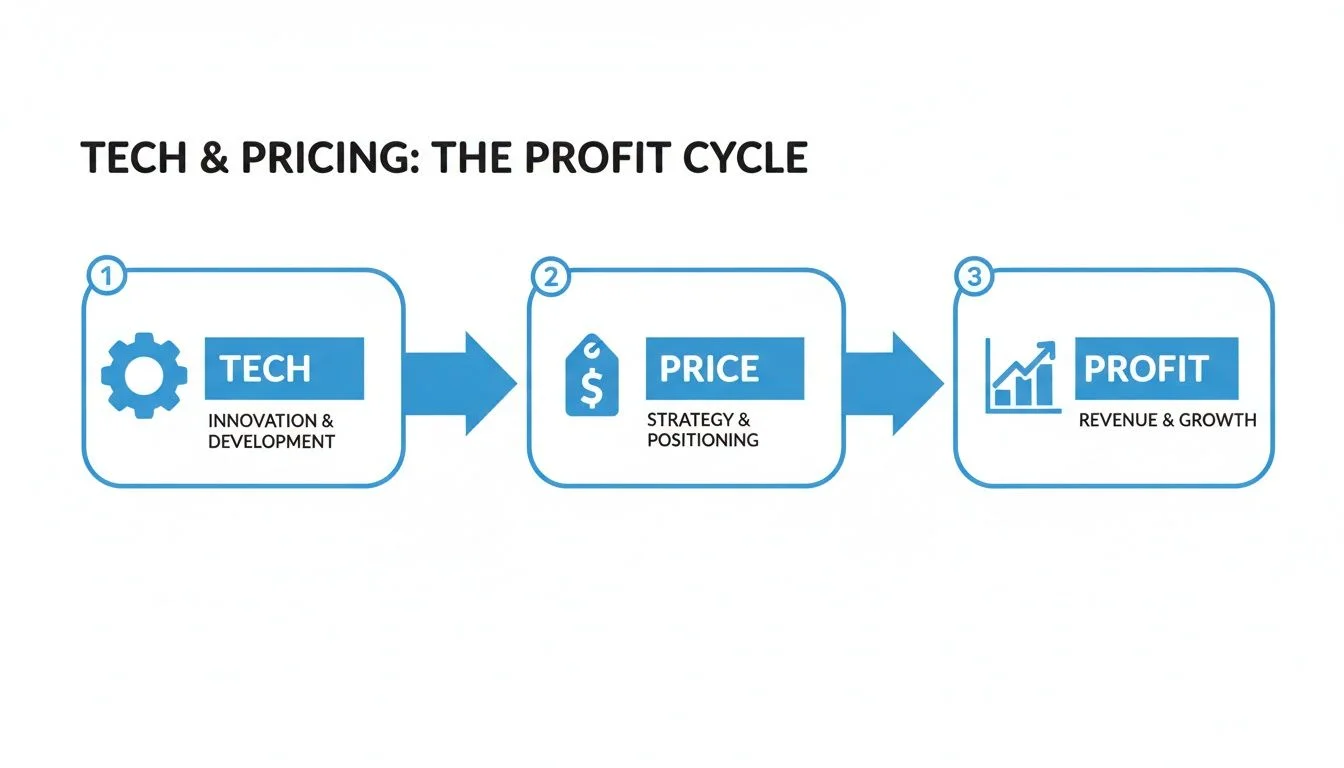
As you can see, a well-oiled sales funnel is the engine that connects your course directly to your revenue goals.
Evergreen vs. Open-Cart Launch Models
Finally, how will people actually buy your course? You've got two main options here, and the right choice depends on your goals and your lifestyle.
| Launch Model | How It Works | Best For |
|---|---|---|
| Open-Cart | You open enrollment for a limited time (e.g., one week), just a few times a year. This model thrives on urgency and scarcity. | Generating big spikes of revenue and creating massive buzz. It's intense, high-energy, and requires a focused launch period. |
| Evergreen | Your course is always open for enrollment. Your sales funnel (ads, lead magnet, and email sequence) runs continuously in the background. | Creating a steady, predictable, and automated stream of income. It's ideal if you want a more hands-off and scalable business. |
Many creators I know start with a big open-cart launch to prove their course concept, get a flood of testimonials, and generate a nice chunk of cash. Then, once the system is proven, they transition to an evergreen model for sustainable, long-term growth.
By building a funnel like this, you stop hoping for sales and start engineering them.
Common Questions About Selling Online Courses
Getting into the online course game can feel like you're trying to solve a puzzle with a thousand moving pieces. You answer one question, and three more pop up. How much can you really make? Which platform won't become a technical nightmare? And where on earth do you find those first few students?
It's a lot to think about. Let's cut through the noise. I've pulled together the most common questions I hear from new course creators and given you the straight, practical answers you need to get moving.
How Much Money Can You Realistically Make?
This is always the first question, and the honest answer is: it's a huge range. You see the headlines about seven-figure launches, but for someone just starting out, it's way more productive to focus on a realistic target. A great, sustainable goal is to hit $1,000 to $5,000 per month within your first year.
Let’s put that into perspective. If you price your course at $299, you only need to find 10 students a month to bring in nearly $3,000. That feels a lot more achievable, right? The key isn't a single, flashy launch; it's building a consistent system that brings in new students week after week.
The most profitable course creators I know have a simple, repeatable sales process. They aren't constantly reinventing the wheel. They're just fine-tuning a system that turns interested people into paying students.
What Is the Best Platform for a Beginner?
When you're just starting out, my advice is almost always to go with an all-in-one platform. Think of services like Teachable, Podia, or Kajabi. They package everything you need: video hosting, payment processing, landing pages, and the course classroom itself, all in one neat bundle.
Why is this so critical for a beginner? Because it lets you put your energy where it actually matters: creating a fantastic course and telling people about it. You avoid getting bogged down in a technical swamp, trying to piece together a dozen different plugins and custom code.
Sure, these platforms have a monthly fee, but the time and headaches they save are worth every penny. They help you get your course out into the world fast, which is exactly what you need to start getting feedback and making those first sales.
How Do I Get My First 10 Students?
Okay, for your first handful of students, forget about complex marketing funnels. This is where you have to roll up your sleeves and do things that don't scale.
Start by getting personal and direct.
- Reach Out Personally: Make a list of people in your network (colleagues, friends, even social media connections) who are a perfect fit for your course. Send them a personal note, explain what you've built, and offer a special "founder's discount" as a thank-you for their early support.
- Be Genuinely Helpful: Find two or three online communities where your ideal students hang out. This could be a niche subreddit, a focused LinkedIn group, or a specific forum. Jump in, answer questions, and offer real value. Do this long before you ever mention your course.
When you finally announce your course in those groups, you won't be a stranger spamming a link. You'll be a trusted expert who has already helped them out.
Do I Need a Large Social Media Following?
Nope. What you need is an engaged email list. An email list of 100 people who are genuinely interested in what you have to say is infinitely more powerful than 10,000 social media followers who scroll right past your posts.
From day one, your number one marketing goal should be building that email list. The best way to do this is by creating a valuable freebie, what we call a lead magnet, that's directly tied to your course topic. This could be a detailed checklist, a short e-book, or a free mini-workshop.
This strategy gives you a direct line to your most interested prospects. You can build trust, share your expertise, and eventually sell your course, all without being at the mercy of some unpredictable social media algorithm.
Ready to turn more of your website visitors into enrolled students? FOMOchat helps course creators boost conversions by combining an AI support agent with real-time social proof. Give your potential students the confidence to buy. See how it works at fomochat.com.