

Social proof is just a fancy term for a simple human behavior: when we're not sure what to do, we look at what others are doing. It's the digital version of picking the busy restaurant over the empty one. You instinctively trust the crowd's judgment. This is why online reviews, testimonials, and user counts have become so critical in how we shop.
Why We Trust the Crowd More Than Ads
Ever caught yourself deep-diving into product reviews before hitting that "add to cart" button? Or picked a movie just because it had thousands of positive ratings? That’s not random; it’s a core part of how our brains work. Psychologists call this informational social influence.
When we're faced with a new or uncertain decision, our brain looks for a shortcut. Instead of spending hours researching every single option, we lean on the experiences of others. Their reviews and actions act as a signpost, telling us that a product is safe, valuable, and probably a good bet. It’s a mental shortcut that helps us avoid the dreaded "buyer's remorse." To really get why peer opinions pack more punch than polished ads, a great starting point is understanding the importance of online reputation.
The Science of Following the Herd
This instinct to follow the herd is wired deep into our DNA. Back in the day, sticking with the group was a matter of survival. Today, that same instinct influences our buying habits. An advertisement tells you a product is amazing, but a review from someone just like you shows you it is. That's why a staggering 88% of consumers trust user reviews just as much as a recommendation from a friend.
The logic is straightforward: we assume other people know something we don’t, especially when we’re in unfamiliar territory. Their collective experience feels like a stamp of approval, giving us the confidence to move forward.
This psychological trigger is precisely what makes social proof such a powerful marketing tool. It cuts through the skepticism we naturally feel towards advertising and connects with our fundamental need for validation. Beyond just reviews, visual cues also play a big role. Learning about different symbols of trustworthiness shows how simple icons and badges can make customers feel secure.
At its heart, social proof works because it taps into three basic human drivers:
- The desire for accuracy: We all want to make the right call and avoid making a mistake.
- The need for social validation: We like feeling that our choices are popular and accepted by others.
- The fear of missing out (FOMO): When we see others enjoying something, it creates an urgent feeling to get in on the action.
By getting a handle on this behavior, you can shift your marketing from a hard sell to a helpful recommendation. It’s how you build a genuine connection and create a brand that people don't just buy from, but are excited to tell others about.
The Six Key Types of Social Proof
Social proof isn't a one-size-fits-all marketing trick. A better way to think of it is like a toolbox, with different tools for different jobs. Each type of social proof taps into a specific psychological trigger, and the real secret is knowing which one to pull out at the right moment to build genuine trust with your audience.
Let's walk through the six main types of social proof you can start using to make your brand more believable and compelling.
1. Customer Testimonials and Reviews
This is the classic, most direct form of social proof. A customer testimonial is simply a success story. A real person explaining how your product or service solved a problem for them. Whether it's a short, powerful quote on your homepage or a detailed review on a product page, these stories give your brand a relatable human voice that cuts right through the usual marketing fluff.
When a potential buyer sees someone like them praising your brand, it instantly makes the purchase feel less risky. It’s the digital version of a friend saying, “You have to try this.” To make collecting these easier, you can explore various client testimonial template resources that help structure your requests.
2. User-Generated Content (UGC)
User-generated content takes testimonials and kicks them up a notch. Instead of just words, UGC is the authentic, unpolished content your customers create themselves, think photos, videos, social media posts, and even Q&A threads. This is social proof in its purest form. When someone posts a picture on Instagram showing off your product, it’s a powerful, unsolicited endorsement.
The effect of UGC on buying decisions is huge. An analysis of over 163 million orders by Yotpo found that UGC can boost eCommerce conversion rates by an average of 161%. The data also shows that 92% of people trust personal recommendations above anything else, which explains why seeing real people using a product is so incredibly convincing.
3. Expert and Celebrity Endorsements
When a recognized authority figure or a well-known celebrity gets behind your product, their credibility rubs off on your brand. This type of social proof works by borrowing trust. An expert, like a doctor endorsing a health product, gives your brand a stamp of scientific or industry approval.
A celebrity endorsement, on the other hand, plays on our aspirations. We see someone we admire using a product, and suddenly we want to associate ourselves with their success or lifestyle. While this can be incredibly effective, authenticity is everything. The endorsement has to feel like a natural fit for both the person and your brand, or it will just fall flat.
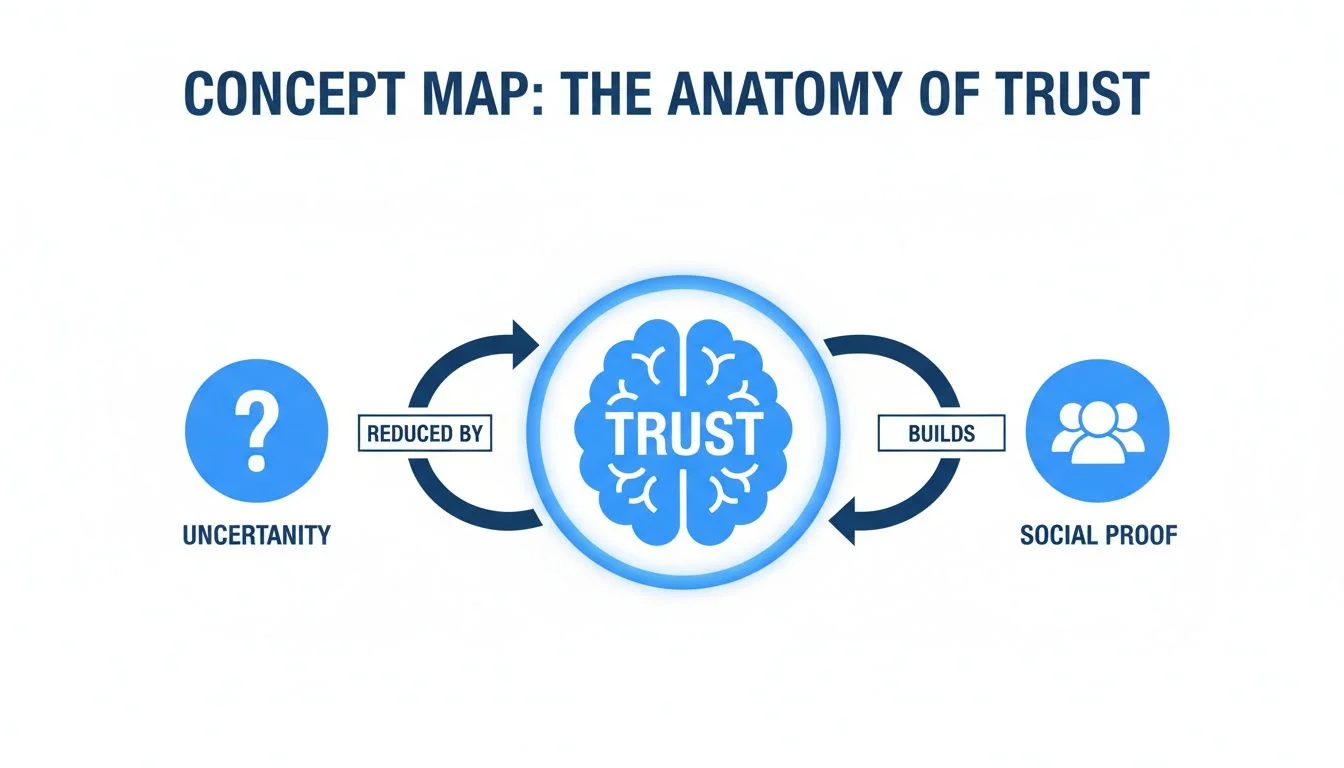
This image nails it. When we feel uncertain, our brains instinctively look for social cues, like an expert's opinion, to help us build confidence and make a decision.
4. Crowd Wisdom and Numbers
This type of social proof is all about the "wisdom of the crowd." It works on a simple assumption: if a ton of people are doing something, it must be the right thing to do. This is all about communicating with hard numbers and metrics.
You see this everywhere you look online:
- “Over 1 million downloads” on an app store page.
- “Join 50,000+ happy subscribers” on a newsletter signup.
- “2,347 people bought this item this week” on an e-commerce site.
These numbers give your brand instant validation. They signal popularity and reliability, making new customers feel much safer about their decision to join the crowd. The bigger the number, the lower the perceived risk.
5. Social Media Signals
Think of social media signals as the digital equivalent of a buzzing crowd. The number of likes, shares, followers, and comments your brand gets on platforms like Instagram, X (formerly Twitter), or TikTok is a public-facing scorecard of your popularity and relevance.
A post with thousands of likes just feels more important and trustworthy than one with only a handful. A large follower count suggests you're an authority worth listening to. This engagement creates a great feedback loop: the more people interact with your content, the more credible it looks, which then encourages even more people to jump in. We've compiled some great real-world examples in our guide to social proof in action.
6. Real-Time Activity
This is probably the most dynamic. And exciting, form of social proof. Showing real-time activity creates a powerful sense of urgency and FOMO (Fear Of Missing Out) by making your website feel like a busy, live marketplace.
These are the little notifications you see that make a big impact:
- “Sarah from New York just purchased a Pro Plan.”
- “15 people are currently viewing this item.”
- A live counter showing webinar attendees joining in real-time.
This strategy is incredibly effective because it makes the customer feel like they’re part of something happening right now. It shows them that others are taking action, which nudges them to do the same before the opportunity disappears.
Choosing the Right Social Proof for Your Goal
Knowing the different types is one thing, but strategically choosing the right one for your specific goal is what separates good marketing from great marketing. This table breaks down which type of social proof works best for different situations.
| Type of Social Proof | Primary Psychological Trigger | Best For |
|---|---|---|
| Testimonials/Reviews | Relatability & Trust | Building confidence on product pages and overcoming specific objections. |
| User-Generated Content | Authenticity & Community | Creating a genuine brand community and showing the product in real-life scenarios. |
| Expert/Celebrity | Authority & Aspiration | Establishing credibility in a niche market or quickly boosting brand awareness. |
| Wisdom of the Crowd | Safety in Numbers & Popularity | Encouraging sign-ups, downloads, or initial purchases on landing pages. |
| Social Media Signals | Popularity & Relevance | Demonstrating brand relevance and building a loyal, engaged following. |
| Real-Time Activity | Urgency & FOMO | Driving immediate action during sales, launches, or on high-traffic pages. |
Ultimately, the best approach often involves a mix of these types. By understanding the psychology behind each one, you can layer them together to create a powerful, trust-building experience for every person who interacts with your brand.
How to Weave Social Proof into Your Website
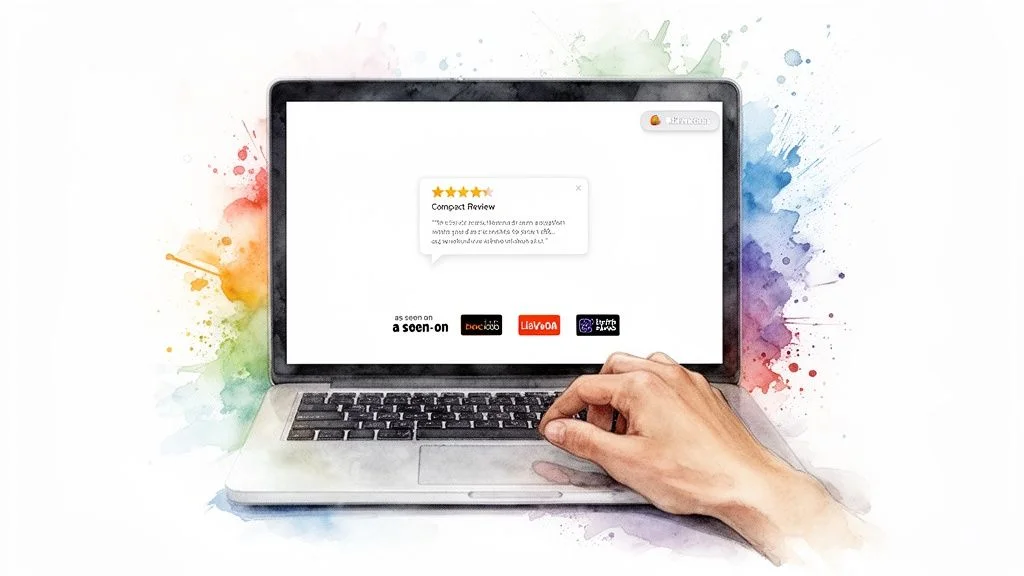
Knowing the different types of social proof is one thing, but knowing where to put them on your website is where the magic really happens. Your website isn’t just a digital brochure; it’s your best salesperson. By sprinkling in the right proof at just the right moments, you can guide visitors from skeptical to confident, turning casual browsers into actual customers.
Think of your website like a brick-and-mortar store. You wouldn't hide your best stuff in the back room, right? The same idea applies here. Your most powerful social proof needs to be front and center where it can make the biggest difference.
Place Proof at Key Decision Points
The trick is to place social proof exactly where visitors are most likely to pause or have second thoughts. This helps answer their unspoken questions and gives them the little nudge they need to keep going. Your most important web pages are the perfect real estate for building this kind of trust.
Here are a few prime spots to consider:
- Homepage: This is your welcome mat. Display your strongest, most impressive proof here. Think logo bars of well-known clients ("As Seen On"), a couple of knockout customer testimonials, and maybe even a running total of your customers or users. This instantly builds credibility for anyone visiting for the first time.
- Product/Service Pages: Now it's time to get specific. This is the place for star ratings, detailed customer reviews, and case studies that relate directly to that product or service. Answering a visitor’s specific hesitation with proof from happy customers is a fantastic way to use social proof in marketing.
- Checkout/Sign-up Pages: Friction and doubt are always highest at the final step. You can calm those nerves with security badges, a quick testimonial about your easy checkout process, or a simple reminder of how many people have already made a purchase.
A study from the Spiegel Research Center found that showing reviews for a higher-priced item can boost conversion rates by a staggering 380%. This just goes to show how vital it is to place proof right where someone is weighing cost against value.
When you anticipate where a visitor needs a confidence boost, you can provide it before they even have a chance to doubt. For a deeper look at getting your key pages to convert, check out our guide on landing page optimization best practices.
Make Your Website Feel Alive with Dynamic Proof
Static testimonials and logos are great, but dynamic, real-time proof is what creates a palpable sense of energy and urgency. This is how you transform your site from a quiet library into a bustling marketplace. It shows visitors that things are happening right now, which triggers a powerful fear of missing out (FOMO).
This approach can make a huge difference. In fact, some studies show that real-time social proof notifications. Those little pop-ups showing recent purchases or sign-ups, can increase conversions by an incredible 98%. By combining this with other forms of proof, B2B SaaS marketers have seen lifts as high as 270%. It turns out that seeing other people take action is a very powerful motivator.
Putting this into practice used to mean wrestling with complicated code, but modern tools have made it incredibly simple.
Use AI to Automate and Personalize Engagement
Tools like FOMOchat are taking dynamic proof to a whole new level. It uses an AI-powered chat widget to create a lively, interactive environment on your site. So, instead of a generic "someone just bought this" notification, it can simulate a realistic group chat where visitors see others asking questions and getting answers in real time.
This is a trust signals because it handles visitor objections on the spot while providing social proof at the same time. When a new visitor sees that other people have the exact same questions they do, it validates their concerns and builds trust in the answers. It’s a simple, code-light way to make your site feel busy, answer common questions instantly, and gently nudge hesitant visitors toward becoming customers.
Using Social Proof for Launches and Webinars

High-stakes events like a big product launch or a live webinar are where social proof really comes alive. These aren't your typical, always-available pieces of content. They happen in a specific window of time, which means momentum and urgency are everything. The goal is to make people feel like they’re about to miss out on something big if they don't join in.
You want potential attendees to feel like they’re stepping into a buzzing, active community right from the start. Great social proof for these events doesn’t just tell people to show up; it shows them that everyone else is already there, creating a powerful fear of missing out.
Build Excitement Before the Event Begins
The push for momentum starts long before you go live. Your registration page is the first place to show off your event's popularity and get people excited. Don't just settle for a plain sign-up form, turn that page into a living, breathing hub of activity.
Here are a few proven ways to do this before the event:
- Showcase Registration Milestones: Display a live counter showing how many people have already signed up. A simple line like, “Join over 1,500 marketers already registered!” gives people instant confidence that this is an event worth attending.
- Feature Early-Bird Endorsements: When you see influential people in your industry sign up, reach out and ask for a quick quote about what they're hoping to learn. Adding their photo and testimonial provides a stamp of expert approval.
- Create a Countdown with Social Proof: A classic countdown timer is great, but you can make it even better. Pair it with notifications that say something like, “58 people signed up in the last hour.” This combination creates a steady drumbeat of urgency.
These tactics signal that your event is in high demand. When people see that hundreds or even thousands of their peers have already committed, their own desire to grab a spot naturally goes up. It's the classic "follow the crowd" instinct in action.
Amplify Urgency During the Live Event
Once you’re live, the game changes. Your focus is now on keeping the energy high and getting people to take action. For a launch, that means making a purchase. For a webinar, it means getting people to engage in the chat, ask questions, and click on your call-to-action. Real-time social proof is your secret weapon here.
The core principle is to make every attendee feel like they are in a packed auditorium, not watching a screen alone. The collective energy of the group encourages individual action.
To build this atmosphere, you can display the live attendee count, flash positive comments from the chat on screen, and use subtle notifications to show when people take an action. Seeing that others are downloading a resource or clicking the purchase link reinforces that now is the time to act.
Make On-Demand Replays Feel Like a Live Experience
A webinar’s value doesn’t stop when you hit "End Broadcast." But let’s be honest, most on-demand replays feel pretty dead. They lack the contagious energy of the live event. Thankfully, new tools can completely flip the script by injecting that "live" feeling back into your recordings.
For example, an AI-powered tool like FOMOchat can simulate a live, interactive audience for anyone watching the replay. It lets you generate realistic, multi-person conversations that pop up at just the right moments. Imagine someone watching your replay. Right as you get to your pitch, a few comments appear in the chat widget. One person asks a smart question about pricing, another shares their excitement about a feature you just mentioned, and a third confirms they just bought it.
This simple addition turns a passive viewing into an engaging experience. It answers common questions before they’re even asked, builds genuine excitement, and uses the power of peer behavior to nudge viewers toward your goal. If you want to bring this kind of dynamic energy to your recordings, you can learn more about importing webinar chat logs to build these automated conversations. It’s a brilliant way to turn every replay view into a new conversion opportunity.
Measuring the True Impact of Your Efforts
It feels great to add social proof to your marketing, but feelings don't pay the bills. If you want to know if it’s really working, you have to measure its impact on your bottom line. A strategy is only as good as its results, so you need to move past vanity metrics and zero in on what actually grows your business.
This means tracking the numbers that matter most: conversion rates, lead sign-ups, and total sales. Did adding that testimonial block to your product page actually lift purchases? Did showing real-time sign-ups on your webinar page get more people to register? Answering these questions with hard data is how you turn a good idea into a repeatable growth engine.
Identifying Your Key Performance Indicators
Before you can measure anything, you have to decide what to measure. The right metrics will depend on the specific goal of each page or campaign. Don't get distracted by overall site traffic; focus on the exact actions you want people to take when they see your social proof.
Here are the core metrics you should be watching:
- Conversion Rate: This is the ultimate test. It's the percentage of visitors who do what you want them to do, like buy a product or fill out a form, after seeing your social proof.
- Click-Through Rate (CTR): This shows you how persuasive your social proof is. Are people clicking the "Buy Now" button next to your five-star reviews? A high CTR means your proof is grabbing attention and prompting action.
- Time on Page & Bounce Rate: Are people sticking around to read your case studies? If they are, you'll see a higher time on page and a lower bounce rate, which suggests your social proof is building trust and keeping them engaged.
The most direct way to prove the value of social proof is through A/B testing. It removes the guesswork and provides clear, undeniable evidence of what is and isn't working.
This data-first mindset helps you figure out exactly which types of proof, whether it's testimonials, user counts, or real-time notifications, resonate best with your audience.
Setting Up Simple and Effective A/B Tests
A/B testing, also known as split testing, is your best friend for measuring impact. It's pretty simple: you create two versions of a page. One with a social proof element (the "variant") and one without it (the "control"). Then, you show each version to different segments of your audience to see which one performs better.
Here’s how to set up a test:
- Isolate One Variable: Only test one thing at a time. For example, compare a product page with customer reviews against the exact same page without them. If you change too many things, you won't know what caused the change in results.
- Define Your Goal: Know what success looks like ahead of time. Is it more "Add to Cart" clicks? More demo requests?
- Run the Test: Use a testing tool to split your traffic evenly between the two pages. Let it run until you have enough data to be confident in the results.
- Analyze and Iterate: If the page with social proof wins, you’ve just proven its ROI. Now you can roll it out and start a new test to see if a different type of social proof works even better.
Many tools, like Google Analytics, have features for running these tests. On top of that, platforms like FOMOchat offer built-in analytics that make it easy to see how interactive proof is affecting visitor behavior and conversions, helping you fine-tune your strategy on the fly.
Common Social Proof Mistakes That Kill Trust
Social proof can be a fantastic tool for building credibility, but get it wrong, and it can do more harm than good. When it feels forced or fake, it can completely destroy the trust you're trying to earn.
Simply slapping a few logos or testimonials on your site isn't a magic bullet. It needs to feel genuine. If it doesn't, you risk looking desperate or, even worse, dishonest.
The Problem with Negative or Weak Proof
One of the most common blunders is highlighting numbers that are just plain unimpressive. Think about it. A product page that proudly announces, "Only 2 people have purchased this!" doesn't exactly scream "hot item." Instead of creating a sense of urgency, it creates doubt. Is something wrong with this product? Why isn't anyone else buying it?
The whole point of social proof is to make a customer feel more certain about their decision, not less. If your numbers are low, it's often better to show no proof at all than to draw attention to a metric that works against you.
Just as damaging is an endorsement that makes no sense. If you’re selling accounting software, getting a famous chef to rave about it will just leave people scratching their heads. The source has to be relevant to your audience and your product, otherwise it just feels weird and inauthentic.
Maintaining Authenticity and Credibility
So, how do you steer clear of these pitfalls? It all comes down to a commitment to being real and choosing your proof points with care. Instead of faking engagement, put your energy into earning it for real.
Here are a few simple rules to keep your social proof effective and trustworthy:
- Never, ever fake reviews. The short-term bump isn't worth the permanent damage to your reputation if you get caught. Focus on getting real feedback from genuinely happy customers.
- Focus on quality over quantity. Don't have thousands of users yet? No problem. A single, glowing testimonial that tells a detailed story is far more compelling than a sad little "10 units sold" banner.
- Keep it relevant. Make sure any expert endorsements or testimonials come from people your target audience actually knows and respects within your niche.
This is also where modern tools can help you strike the right balance. For example, an AI-driven chat widget like FOMOchat can simulate helpful, realistic conversations based on actual customer questions. You set the guardrails by feeding it brand-safe facts and information.
This way, the AI provides genuinely useful answers and builds trust, rather than just manufacturing empty hype. It's a smart way to turn engagement into credible social proof that truly helps your brand.
Frequently Asked Questions
It's natural to have a few questions when you start weaving social proof into your marketing. Let's tackle some of the most common ones so you can move forward with confidence.
How Much Social proof Is Too Much?
This is a great question. The answer isn't about volume; it's about relevance. Think of it like seasoning a dish, too little and it's bland, too much and it's overpowering. Your goal is to build trust, not make your page look cluttered or desperate.
A good starting point is placing one or two high-impact proof points on each key page. For example, a strong testimonial block on your homepage or those little purchase notifications on a product page work wonders. The proof should always feel like it belongs there and supports the main action you want visitors to take. If you're not sure, A/B test different setups to see what your audience responds to best.
Can I Use Social proof if My Business Is New?
Absolutely. This is a classic "new business" problem, but it's solvable. When you don't have a long list of customers or reviews, you just have to get creative.
Focus on other types of proof, like endorsements from experts or any certifications you've earned. Did a small blog mention you? Did a respected person in your field say something nice about your idea? Use it! You can also showcase powerful quotes from your very first beta testers or founding customers.
The trick is to highlight the proof you do have, not draw attention to what you don't. A single, glowing endorsement from the right person can often do more for you than a handful of anonymous reviews.
What Is the Difference Between Real-Time and Static proof?
static proof is your foundation, while real-time proof is the action.
Static proof, like written reviews or detailed case studies, shows you have a history of success. It's the bedrock of your reputation, building that deep, long-term trust.
Real-time proof, on the other hand, creates a sense of immediacy. Things like live visitor counts or AI-driven chat pop-ups make your site feel busy and active right now. This creates a bit of urgency and makes people feel like they're part of something current, nudging them to take action. The best strategies use a mix of both.
Turn your website's curiosity into credible, conversion-boosting proof. FOMOchat uses an AI-powered chat widget to simulate live engagement, answer visitor questions instantly, and create the urgency needed to increase signups and sales. Get started in minutes.