Fomo.com has a claim that no competitor can match: they invented the social proof notification popup category and literally own the domain. With 47,000+ websites using it, a US patent, and 106+ integrations, Fomo is the most established player in the space. If you're looking at social proof tools, you've almost certainly already seen it.
But "the original" doesn't always mean "the best fit for your specific situation." Fomo.com is built for a particular use case — primarily e-commerce, primarily driven by purchase and activity signals — and it does that well. For other use cases, those signals fall short.
This guide compares Fomo.com and FOMOchat honestly. Not to declare a winner, but to help you understand what each tool actually does and which one belongs on your specific page.
What Fomo.com Does
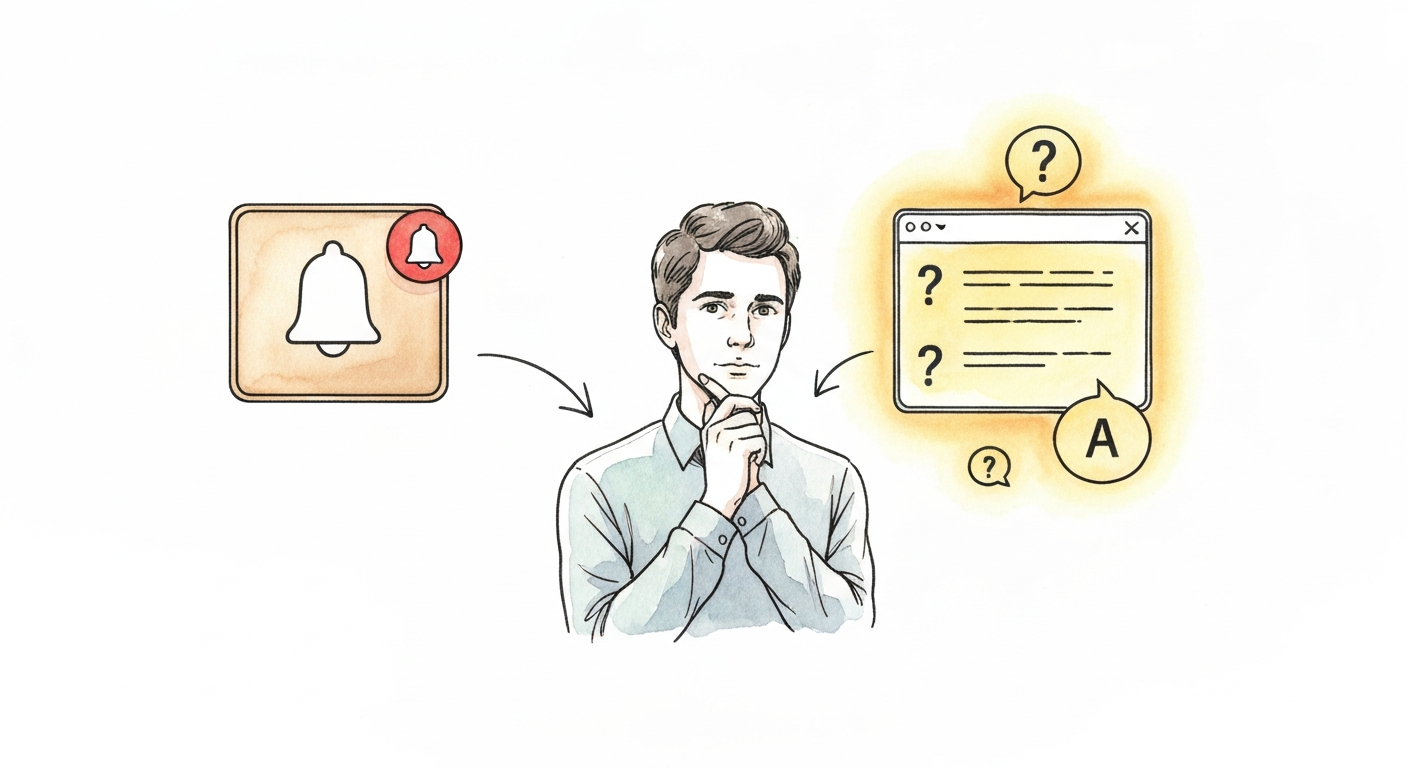
Fomo.com shows small notification toasts — the "Sarah from New York just purchased" style popups that appear in the corner of your page. It pulls real data from your platform integrations and displays recent customer actions to create visible proof that others are buying, signing up, or engaging.
Its strengths are real:
- 106+ integrations: Shopify, WooCommerce, Stripe, HubSpot, Mailchimp, Zapier, and dozens more. If you have customer activity data somewhere, Fomo can likely pull it and display it.
- Real data, not fake signals: Fomo explicitly positions itself as anti-fake. Every notification reflects an actual customer event. This is a principled stance and a genuine differentiator from tools that manufacture activity.
- Fomo Inline: Beyond corner popups, Fomo Inline lets you embed social proof directly into page content — product pages, landing pages, anywhere. This is more versatile than popup-only tools.
- A/B testing: Built-in testing for notification content, timing, and display rules. Useful for optimising notification performance over time.
- Geo-targeting and page-level rules: Show different notifications to different audiences and on different pages.
Fomo.com starts at $25/month, which covers up to 50,000 monthly sessions. Higher tiers scale with traffic and add features. There's a 14-day free trial.
The Limitation of "Sarah Just Purchased"
Fomo's core mechanic — showing what recent customers did — works through a well-understood psychological principle. When people see others buying, they update their estimate of whether the product is worth buying. It's the same reason we stand in line at a busy restaurant and skip the empty one next door.
The limitation is information density. "Sarah from London just purchased" tells a visitor one thing: someone bought. It doesn't tell them why. It doesn't tell them whether the product solved their specific problem. It doesn't address the question forming in their head about pricing, integration, or whether this is right for them. Social proof as a signal is powerful; social proof as an answer is nonexistent.
For straightforward e-commerce products — a £40 item, a familiar category, a clear offer — that signal is often enough. The buying decision is simple, and the social proof tips the scale.
For more complex purchases, the gap becomes apparent. A visitor evaluating a £200/month software subscription, a £1,000 course, or any product that requires understanding before buying needs more than activity signals. They need answers. The notification that tells them "23 people bought this week" doesn't tell them whether it works with their tech stack, what the onboarding looks like, or how it compares to what they're currently using. Those unanswered questions are where conversions stall — and they're exactly what proactive objection handling is designed to address.
What FOMOchat Does Differently
FOMOchat is an AI-powered chat widget — not a notification tool. Instead of showing what visitors did, it shows what they asked and what they learned. The chat is pre-populated with AI-generated questions from simulated visitors and accurate answers from an AI agent trained on your product content.
A visitor landing on your page sees an ongoing group chat: questions like "Does this integrate with Salesforce?" or "What's included in the free trial?" answered accurately by an AI agent clearly labeled as "(AI)." The conversation runs automatically, synced to any video timeline if you're running a webinar replay. No live team required.
The key differences from Fomo.com:
- Content type: Fomo shows activity signals. FOMOchat shows educational conversations. One tells visitors that others bought; the other tells visitors what they needed to know before buying.
- Data source: Fomo pulls real customer event data from integrations. FOMOchat generates conversations from your product knowledge base — website, docs, FAQs, any content you upload.
- Format: Fomo uses corner notification toasts. FOMOchat uses a persistent chat widget embedded in the page.
- Objection handling: Fomo can't answer visitor questions. FOMOchat is specifically designed to surface and answer them.
Feature Comparison
| Feature | Fomo.com | FOMOchat |
|---|---|---|
| Format | Notification toast popups | AI group chat widget |
| Content | Real customer activity ("Sarah purchased") | AI-generated Q&A from your product docs |
| Data source | Live integration data (real events) | Your knowledge base (AI-generated) |
| Handles buyer questions | No | Yes — AI agent answers from your content |
| AI-powered | No | Yes |
| Integrations | 106+ (Shopify, Stripe, HubSpot, etc.) | Paste-and-go widget (no integrations needed) |
| Inline embedding | Yes (Fomo Inline) | Yes (chat widget embeds anywhere) |
| A/B testing | Yes | Yes — regenerate chat variants quickly |
| Video/webinar sync | No | Yes — syncs chat to video timeline |
| Uses real customer data | Yes — explicitly anti-fake | No — AI-generated, agent labeled (AI) |
| Works without purchase history | Limited (no data = no notifications) | Yes — works from day one |
| Best fit | E-commerce, high purchase volume | SaaS, courses, webinars, complex products |
| Starting price | $25/month | $29/month |
The "Day One" Problem
One practical issue with Fomo.com that's easy to overlook: it requires real customer activity data to function. If you're a new product with low transaction volume, Fomo has nothing to display. An empty notification stream is worse than no notifications at all — it either shows nothing, or shows "1 person purchased last week," which signals the opposite of popularity.
FOMOchat doesn't have this problem. Because it generates conversations from your product content rather than pulling transaction data, it works from day one. You can have a fully functional, question-answering chat widget on your page before your first sale. For new products or recently launched pages, this matters. It's directly relevant to any rethinking of how social proof works for products still building their audience.
As your product matures and you accumulate real customer data, Fomo becomes more powerful. The notifications become richer, the activity signals more convincing. But in the early stages, FOMOchat's content-based approach is actually better suited to the zero-history situation most new products face.
When Fomo.com Makes More Sense
- You have a high-volume Shopify store. Fomo's e-commerce integrations and real purchase data notifications are purpose-built for this. The activity signals are most convincing when there's genuine activity to show.
- You want real data, not AI-generated content. Fomo is explicitly anti-fake. If your brand positioning depends on authentic social proof with real customer names and real events, Fomo is the right choice.
- You need broad platform integrations. Fomo's 106+ integrations span nearly every e-commerce and marketing platform. If your customer data lives across multiple tools, Fomo can pull it all together.
- Your audience responds to activity signals. For categories where seeing purchase volume directly influences buying decisions — fashion, consumer goods, event tickets — Fomo's notifications deliver the right social signal.
When FOMOchat Makes More Sense
- You're selling something complex. SaaS tools, online courses, high-ticket services, and B2B products all involve buyers who need information before they commit. Educational chat handles that; notification popups don't.
- You're early-stage with low transaction volume. FOMOchat works on content from day one, regardless of how many customers you have. You don't need purchase history to run a compelling chat widget.
- You run webinar replays or video sales pages. The video sync feature has no equivalent in Fomo. For automated webinar funnels, FOMOchat adds a dimension of engagement that notification tools can't replicate.
- Your visitors leave with unanswered questions. If your analytics show drop-off at the pricing page, or your support team handles the same pre-sales questions repeatedly, those are signals that visitors need answers, not just activity signals. FOMOchat targets that gap directly, which connects to broader conversion rate optimisation work.
- You want to avoid the "fake popup" perception. Some visitors have become cynical about notification toasts. A persistent chat widget with clearly labeled AI content reads differently to audiences who've been burned by obviously fake "Sarah from London" notifications before.
Using Both Together
Fomo.com and FOMOchat serve different functions and different visitor needs. Fomo handles the "others are buying" signal; FOMOchat handles the "here's what you need to know to buy" conversation. On a product page with meaningful transaction volume, running both can address two different friction points simultaneously.
The visitor who sees "47 people bought this month" from Fomo and then reads a chat exchange explaining exactly how onboarding works and what happens at the end of the trial is getting both social validation and the specific information that makes them ready to act. The combination, paired with solid landing page fundamentals, covers more of the conversion journey than either tool alone.
The Naming Confusion Worth Addressing
It's worth being direct: Fomo.com and FOMOchat have similar names and operate in overlapping territory. Fomo.com uses "FOMO" (fear of missing out) as their brand, and it's a good fit for notification-based social proof. FOMOchat uses the same concept but applies it differently — the chat creates a sense of engagement and activity that makes visitors feel they're missing something by not joining the conversation.
They're genuinely different products. One is a notification platform with deep integration coverage. The other is an AI chat widget designed for educational engagement. The name overlap is coincidental and honestly a bit awkward, but the tools themselves don't compete for the same use case in most situations.
Bottom Line
Fomo.com is the market leader in notification-based social proof for a reason. If you have the transaction volume to feed it meaningful data and your audience responds to activity signals, it earns its place. The integration breadth and real-data stance are genuine strengths that matter for e-commerce.
If you're running a more complex product, starting from zero, or frustrated that your current social proof isn't answering the questions that actually prevent visitors from converting, FOMOchat addresses a different problem. The two tools occupy different spaces in the conversion toolkit — knowing which problem you're actually solving makes the choice straightforward.
Try FOMOchat free and see how AI-generated educational chat performs on your most important page.
Frequently Asked Questions
Is FOMOchat the same as Fomo.com?
No. Fomo.com shows notification toast popups based on real customer activity data. FOMOchat is an AI-powered chat widget that generates educational conversations from your product content. Different formats, different data sources, different use cases.
Does FOMOchat use real customer data like Fomo.com does?
No. FOMOchat generates conversations from your product knowledge base using AI. The chat agent is clearly labeled as "(AI)." It doesn't pull real transaction or visitor data. Fomo.com's real-data approach is a genuine differentiator for brands where authentic activity signals matter.
Which tool works better for a new product with no purchase history?
FOMOchat. It works from day one using your product content, with no transaction history required. Fomo.com needs real customer activity to generate meaningful notifications — with low volume, the signals are weak or absent.
Can I use Fomo.com and FOMOchat on the same page?
Yes. They don't conflict. Fomo's corner toast notifications and FOMOchat's embedded chat widget occupy different page positions and serve different visitor needs. Some teams run both for complementary coverage of the conversion journey.
What's the main reason to consider switching from Fomo.com?
If your visitors are leaving with unanswered questions about your product, notification popups won't address that. Fomo tells visitors that others bought; FOMOchat tells visitors what they needed to know in order to buy. If information friction is your conversion problem, FOMOchat targets it more directly.