
Getting a reply to a follow-up email often comes down to one critical element: the subject line. It is the gatekeeper to your message, and in a crowded inbox, a weak subject line means your valuable insights and offers go completely unseen. If your follow-up emails aren't generating the desired replies, a structured approach can make a significant difference; for a proven framework, you can discover this helpful 6-Part Webinar Follow Up Email Sequence Template for effective strategies.
For initial outreach subject lines (not just follow-ups), see our companion guide on catchy subject lines for emails.
This guide breaks down the science and strategy behind high-performing email subject lines for follow up, moving beyond generic templates to give you a real competitive edge. We will explore 8 distinct, psychology-backed approaches, complete with dozens of examples, strategic analysis, and tactical takeaways you can implement immediately.
Whether you're re-engaging a cold lead, following up after a product demo, or reminding someone about a trial, these frameworks are designed to cut through the noise. They spark curiosity and compel your audience to click, read, and respond. We'll also examine how modern tools like AI-powered social proof widgets can supercharge these strategies, turning a simple follow-up into a powerful conversion event. Let's get started.
1. The Social Proof Angle: "See how [X] companies are converting with live chat proof"
This type of email subject line for follow up immediately grabs attention by tapping into a powerful psychological trigger: social proof. Instead of simply asking for a reply, it demonstrates value by showing how others are already succeeding with your solution. It works by creating a sense of curiosity and a fear of missing out (FOMO) on tangible benefits that peers are enjoying.
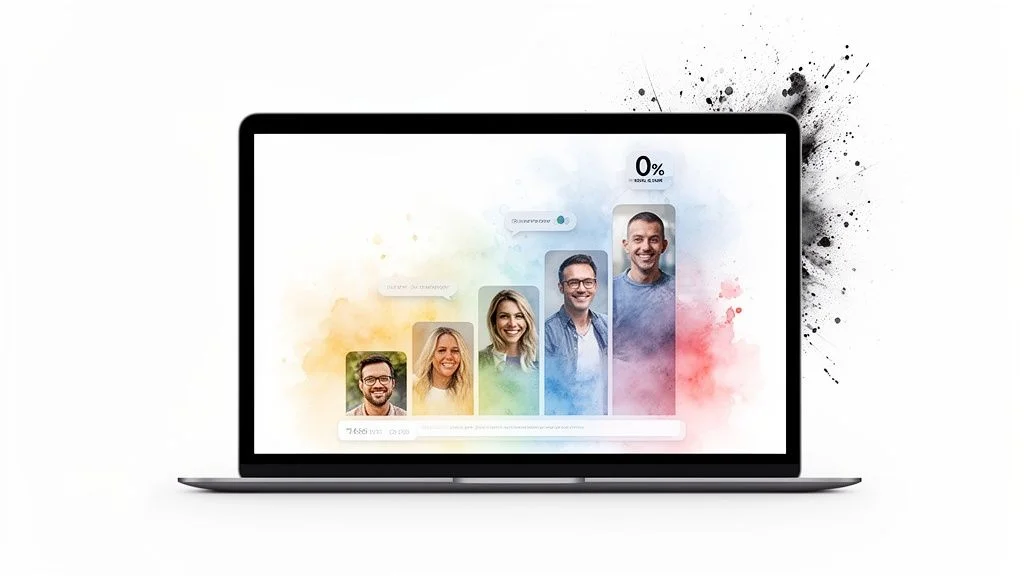
The core strategy here is to shift the focus from your needs (getting a response) to the prospect’s potential gains (achieving results like their competitors). This makes the follow-up feel less like a nag and more like a helpful, data-backed insight. It’s an ideal approach for solutions like FOMOchat, where the product's value is directly tied to social validation and conversion metrics.
Strategic Breakdown
This subject line angle combines three key elements for maximum impact:
- Proof: It promises concrete evidence, not just abstract claims.
- Outcome: It highlights a desirable result, like higher conversions or sales.
- Curiosity: It makes the reader wonder how others are achieving these results.
Key Insight: The best social proof subject lines are specific and quantifiable. "See how 500+ SaaS teams increased conversions" is far more compelling than "See how other companies are succeeding."
Examples in Action
See how 500+ SaaS teams increased conversions 34% with live social proofWatch: 3 product launches that used chat proof to hit 5x signup targetsHow [Competitor Name]'s team used authentic chat reactions to close 40% more deals
Actionable Tips
- Use Your Strongest Metric: Replace
[X]with your most impressive and credible number. This could be a customer count, a specific conversion lift percentage, or a revenue figure from a case study. - Start with an Action Word: Begin your subject line with words like
See,Watch, orHowto set the expectation of a demonstration or story. - A/B Test Specificity: Test different numbers. Does a 34% conversion lift perform better than a rounded 30%? Does "500+ teams" resonate more than "hundreds of teams"? Find the sweet spot for your audience.
2. The Urgency-Based Follow-up: "You're missing [X%] in conversions without live engagement"
This style of email subject line for follow up creates urgency by highlighting what the recipient is potentially losing. It taps directly into the powerful psychological principle of loss aversion, where the pain of losing something is a much stronger motivator than the pleasure of gaining something of equal value. It's particularly effective as a follow-up because it reframes the conversation from "Did you see my last email?" to "You are actively leaving money on the table."
Follow-up emails perform best when they pair timing with urgency. See our guide on how to create urgency in sales for the broader tactical picture.
The strategy here is to quantify the cost of inaction. By presenting a specific, believable metric of what they are missing out on, the follow-up feels less like a sales pitch and more like a critical business alert. This approach is well-suited for solutions like FOMOchat, where live engagement features can be directly tied to preventing cart abandonment and increasing on-page conversions.
Strategic Breakdown
This subject line angle works by combining three potent elements:
- Loss Aversion: It frames the situation around a potential loss, not a gain.
- Quantification: It uses a specific number
[X%]to make the loss feel real and measurable. - Implied Solution: It hints that the problem (missing conversions) is fixable by addressing the lack of "live engagement."
Key Insight: The power of this angle comes from making the cost of doing nothing tangible. "You're missing 23% in conversions" is far more alarming and action-oriented than "You could increase conversions."
Examples in Action
Your competitors are capturing the 23% conversion lift you're leaving on the tableOne thing holding back your webinar conversions: no live social proof (fix in 5 min)The #1 reason course launches fail: missing this one engagement layer
Actionable Tips
- Use Believable Percentages: Stick to specific, modest numbers (e.g., 18%, 23%, 31%) rather than round or exaggerated claims like 50%. Back these figures up with data from case studies or industry reports in the email body.
- Highlight the 'Why': Clearly connect the loss to a specific problem. Phrases like "without live engagement" or "no live social proof" identify the gap your solution fills.
- Offer a Quick Fix: In your email body, position your solution as a simple and fast way to solve the problem. Mentioning a "5-minute fix" or an "easy implementation" lowers the barrier to taking action.
3. The Demonstration Follow-up: "[X-second] video: watch real conversations convert"
This email subject line for follow up works because it promises a quick, visual payoff with minimal effort from the prospect. By specifying a short video length like "90-second video," you remove the recipient's fear of a long, boring sales pitch. Instead, you offer an immediate glimpse of your product delivering real results, which is perfect for a tool like FOMOchat that generates visible, multi-person dialogues.
The core strategy is to replace telling with showing. Instead of describing what your product does, you provide direct, visual proof. This approach is highly effective for post-demo or trial follow-ups where the prospect is already familiar with your solution but needs a final push to see its tangible impact. It feels less like a follow-up and more like a valuable, bite-sized piece of content.
Strategic Breakdown
This subject line angle combines three powerful elements to drive opens and clicks:
- Low Friction: It promises a short, time-defined commitment ("X-second video").
- Proof: It offers a direct demonstration of the product in action, not just claims.
- Curiosity: It makes the reader want to see how these conversations actually convert.
Key Insight: A video follow-up is not just about showing your product's features; it's about showing the outcome. Frame the video around a specific success story or metric to make it compelling.
Examples in Action
90-second video: how this product page captured 47% more leads with chat proofWatch: a $2M webinar launch using FOMOchat's AI conversations (2 min clip)30-second proof: see how authentic group chat reactions close objectionsVideo inside: watch our 'boring product' get 3x more signups with live proof
Actionable Tips
- Use Specific Time Stamps: Test short durations like "30-second," "60-second," or "90-second." These numbers feel precise and respect the reader's time, increasing credibility and open rates.
- Embed a Video Preview: When possible, embed a GIF or a video thumbnail with a play button directly in the email body. This visual cue dramatically increases click-through rates. You can learn more about how to showcase these interactions by viewing visitor conversations.
- Start with the "After": Open your video with the most impressive result or metric. For example, show a "3x more signups" graphic in the first three seconds to hook the viewer immediately.
- A/B Test Length vs. Content: Test a "30-second video" subject line against a "2-minute walkthrough" to see which resonates better with your audience. Some segments prefer quick proof, while others may want a more detailed look.
4. The Objection-Handling Follow-up: "Still worried about setup complexity? Here's why [X] teams implemented in <5 min"
This powerful email subject line for follow up directly confronts a common and often unspoken sales objection: implementation friction. Instead of avoiding the tough questions, this approach shows confidence by acknowledging the prospect’s potential hesitation and immediately dismantling it with proof. It’s a proactive strategy that says, “I hear your concern, and it’s already solved.”

The core idea is to reframe a potential weakness (fear of a complex setup) into a surprising strength. This is especially effective for solutions like FOMOchat, where a code-light, fast installation is a key competitive advantage. By leading with the solution to their unstated problem, you build trust and make the decision to move forward feel much safer and easier.
Strategic Breakdown
This subject line gets its power from a conversational, empathetic, and data-driven structure:
- Empathy: It starts by validating the prospect's feeling ("Still worried about...?").
- Reassurance: It counters the fear with a specific, time-based claim ("implemented in <5 min").
- Proof: It uses a number ([X] teams) to show this isn't an isolated case.
Key Insight: Directly naming a prospect's fear shows you understand their world. When you can immediately solve that named fear with data, you transition from a salesperson to a trusted problem-solver.
Examples in Action
Concerned about implementation? 300+ teams go live in 4 minutesSetup complexity holding you back? Watch: our fastest enterprise onboardingNot a coder? Here's how our no-code setup actually works (5 min)'How long does setup take?' Our answer: 2.5 minutes (then watch conversions grow)
Actionable Tips
- Lead with the Objection: Start with conversational phrases like
Still [concern]?,Worried about.?, orIs [objection] holding you back?to show you're listening. - Use a Specific Time Metric: "4 minutes" is much more believable and impactful than "quickly" or "in minutes." The more precise the number, the more credible the claim.
- Provide Resources: The email body should pay off the promise. Link to a step-by-step guide on installing the widget or include a short video to visually prove the ease of setup.
- Offer a Guided Option: Reduce friction further by offering a "white-glove setup call" as a CTA for those who still feel hesitant. This is a great closing tactic for high-value leads.
5. The Scarcity-Based Follow-up: "Limited: early access to [Feature] only for [Y] more days"
This approach uses scarcity, a core principle of persuasion, to generate immediate action. An email subject line for follow up built on scarcity signals that an opportunity is about to disappear, which triggers a person's fear of missing out (FOMO). It's a powerful way to break through indecision and get a prospect to act now rather than later.
The strategy is effective because it reframes the follow-up as a time-sensitive alert, not a sales pitch. You're providing a helpful warning that a special price, exclusive feature, or limited-quantity bonus is expiring. This is perfect for announcing new AI features or expanded analytics in a tool like FOMOchat, where early access to advanced tools provides a real competitive advantage.
Strategic Breakdown
This subject line capitalizes on two types of scarcity to drive opens and clicks:
- Time-based: The offer is only available for a limited period (e.g., "ends Friday").
- Quantity-based: The offer is only available to a certain number of people (e.g., "5 spots left").
Key Insight: Authentic scarcity is crucial. Using fake deadlines or constantly extending offers will damage your brand’s credibility. Use this tactic for genuine limited-time promotions, beta access, or special launch events.
Examples in Action
Early bird pricing ends in 48 hours: lock in 40% off FOMOchat ProOnly 5 spots left: free social proof audit for course creators this weekVIP access expires Friday: advanced AI conversations + priority supportLast chance: launch package pricing available only through [DATE]
Actionable Tips
- Be Specific with Deadlines: Don't just say "soon." Use clear timeframes like "ends Friday at midnight" or "only 48 hours left." Adding a countdown timer inside the email body visually reinforces the urgency.
- Highlight the "What": Scarcity alone isn't enough. Pair the deadline with the specific benefit. What exactly does the user lose if they don't act? Examples include "lock in 40% off" or "access advanced AI."
- A/B Test Urgency Type: Test whether your audience responds better to time-based urgency ("ends Friday") or quantity-based scarcity ("5 spots left"). The results can reveal what motivates your specific market segment.
6. The Question-Based Follow-up: "What if your [conversion metric] could improve by [X%] in 30 days?"
This type of email subject line for follow up bypasses sales-speak by posing a direct, thought-provoking question. Instead of telling a prospect what you can do, it invites them to imagine a better outcome. The "What if." framework is a consultative approach that shifts the dynamic from a pushy salesperson to a helpful advisor.
The strategy here is to spark curiosity and prompt the recipient to mentally simulate success. By framing the benefit as a question, you make the follow-up feel less like an unwanted reminder and more like the start of a valuable conversation. This works well because it focuses entirely on their potential gain, making them want to find out how such an improvement is possible.
Strategic Breakdown
This subject line angle works by combining three powerful psychological triggers:
- Curiosity: The question format naturally makes people want an answer.
- Personalization: It directly references a metric the prospect cares about, like signups or conversions.
- Benefit-Driven: It focuses on a desirable future state, not on your product’s features.
Key Insight: A question-based subject line is most effective when the email body immediately answers the "what if" with concrete proof, such as a mini case study, a customer quote, or a link to a resource explaining the mechanism behind the results.
Examples in Action
What if your webinar signups increased 40% without changing your pitch?What if every product page visitor saw proof of others converting?What if your course had social proof working 24/7 while you sleep?What if you could reduce common objections before prospects even ask?
Actionable Tips
- Personalize the Metric: Tailor the
[conversion metric]to your audience segment. Use "enrollments" for course creators, "trial signups" for SaaS teams, and "attendance" for webinar hosts. - Use Realistic Numbers: Base your
[X%]improvement on actual case study data. A believable 20-50% increase is often more compelling than an exaggerated, unrealistic claim. - Connect to Proof: In the email body, immediately deliver on the promise. Start with, "It's possible. Here’s how [Client Name] did it." and then present your evidence. A tool like FOMOchat, for instance, provides the social proof that makes these "what if" scenarios a reality. You can learn how to set up your first social proof notification to get started.
7. The Social Proof Meta Follow-up: "[X] people checked this out yesterday. Here's what happened."
This type of email subject line for follow up is brilliantly meta, using social proof about the previous email to generate interest in the original message. It works by creating FOMO not about your product, but about the conversation and discovery happening around it. By showing that a specific number of peers have already engaged, you make opening the email feel like joining an important, ongoing event.
The strategy flips the script on a traditional follow-up. Instead of just repeating your first message, you’re reporting on the reaction to it. This approach is particularly effective for products like FOMOchat, as it mirrors the core value of the product itself: showing real-time engagement to build trust and urgency. It reframes the follow-up from a simple reminder into a newsworthy update.
Strategic Breakdown
This subject line angle succeeds by layering social proof on top of your existing follow-up sequence.
- Immediacy: Words like
yesterdayor24 hourscreate a sense of recent, relevant activity. - Intrigue: The phrase
Here's what happenedpromises a reveal or an inside look at the outcome. - Credibility: Using a specific number (
847,312) makes the social proof feel authentic and data-driven.
Key Insight: This technique works best as a third or fourth touchpoint, once you have meaningful engagement data from your initial email send. The "proof" is the activity from your previous message.
Examples in Action
847 growth leaders opened this yesterday. Here's what they discovered about FOMOchat.312 course creators tried our free demo in 24 hours. Here's the #1 reaction.Live now: the conversation that convinced 156 teams to upgrade (watch real reactions)Yesterday's webinar: 1,200+ watched our demo. Here's the most shocking question from viewers:
Actionable Tips
- Use Real Metrics: Pull actual data from your email platform’s analytics (opens, clicks) or your own product signups from the last 24-48 hours. Honesty is key.
- Promise a Payoff: The second half of your subject line should clearly state what the reader will learn.
Here's what they discoveredorHere's the #1 reactionsets a clear expectation. - Send Within 48 Hours: This tactic is most powerful when the initial email is still fresh in people's minds. Sending it a day or two later maintains momentum and context.
8. The Results-Focused Follow-up: "[Customer name] increased [metric] by [X%]. Here's their setup."
This type of email subject line for follow up leads with your most powerful asset: a customer’s success story. By putting a specific, quantifiable result front and center, you immediately shift the conversation from your product’s features to the prospect's potential gains. It’s a highly effective strategy because it answers the "What's in it for me?" question before the email is even opened.
Instead of asking for a moment of their time, you’re offering a blueprint for success. This approach turns a cold follow-up into a valuable piece of content, showing the recipient exactly what's possible and hinting at the simple steps required to get there. It creates intrigue around the "how," making the email body a must-read for anyone looking to achieve similar results.
Strategic Breakdown
This subject line is built on a foundation of tangible proof and actionable insight:
- Specificity: It uses a real company name, a concrete metric, and a specific percentage.
- Outcome-Driven: The entire focus is on the result achieved, not the tool used.
- Value Proposition: It promises to reveal the "setup" or "strategy," offering immediate educational value.
Key Insight: Prospects are more interested in replicating a peer's success than hearing a sales pitch. By framing your follow-up as a mini-case study, you position yourself as a helpful expert, not just a vendor.
Examples in Action
Notion's growth team increased sign-ups 47% with FOMOchat. Here's exactly how (5-min setup).TechStars accelerator increased webinar attendance 63%. Here's the one change they made.This SaaS did $1.2M in launch revenue using our social proof chat. Here's their exact strategy.
Actionable Tips
- Lead with Your Best Case Study: Use a recognizable company name if you have a public case study. If not, use a descriptive identifier like "This SaaS" or "An online course."
- Focus on Impressive Metrics: Highlight a specific, impressive number. A revenue figure, a double-digit percentage lift in conversions, or a significant increase in attendance works best. You can track these results directly from your analytics dashboard.
- Keep the "How" Simple: In the email body, provide 3-5 clear, concise steps that led to the result. This makes the success feel achievable and encourages the reader to take action, whether that’s booking a demo or trying the setup themselves.
8 Follow-Up Email Subject Line Comparison
| Subject Line | 🔄 Implementation Complexity | ⚡ Resource Requirements | 📊 Expected Outcomes | Ideal Use Cases | ⭐ 💡 Key Advantages / Tips |
|---|---|---|---|---|---|
| The Social Proof Angle: "See how [X] companies are converting with live chat proof" | Low–Moderate, needs verified metric | Minimal copy + credible metric/screenshots | Higher opens & curiosity; improves trust when substantiated | SaaS product launches, GTM teams, growth marketing | ⭐ Strong fit with social-proof positioning; 💡 Use a real, prominent metric and recognizable names |
| The Urgency-Based Follow-up: "You're missing [X%] in conversions without live engagement" | Low, copy-focused but needs data validation | Minimal copy; requires data/benchmarks and credibility checks | Strong re-engagement and open rates; risk of skepticism if unsubstantiated | Re-engaging cold leads, B2B SaaS, time-sensitive launches | ⭐ Effective for driving action; 💡 Use modest percentages and cite sources/case studies |
| The Demonstration Follow-up: "[X-second] video: watch real conversations convert" | Moderate–High, requires video production | Video creation, hosting (Wistia/Vidyard), thumbnail/GIF | High engagement and retention; effective demo-to-conversion path | Visual learners, executives, launch teams needing proof | ⭐ High engagement potential; 💡 Keep videos 30/60/90s, add captions and clear CTA |
| The Objection-Handling Follow-up: "Still worried about setup complexity? Here's why [X] teams implemented in <5 min" | Low–Moderate, needs implementation proof | Case studies/testimonials, quick setup walkthrough or checklist | Reduces friction and increases trial/activation rates | Technical decision-makers, non-technical founders, growth teams | ⭐ Removes a primary barrier; 💡 State exact minutes and include step-by-step reassurance |
| The Scarcity-Based Follow-up: "Limited: early access to [Feature] only for [Y] more days" | Low, copy/simple offer setup but compliance required | Offer management, countdown timers, legal checks | Significant lift in opens/CTRs when genuine; must avoid overuse | Product launches, limited-tier offers, cohort-based courses | ⭐ Creates urgent demand; 💡 Use real deadlines and be transparent about limits |
| The Question-Based Follow-up: "What if your [conversion metric] could improve by [X%] in 30 days?" | Low, copy-focused, benefits from personalization | Segment-specific copywriting and metric selection | Higher cognitive engagement; consultative tone that prompts reply | Mid-market/enterprise buyers, skeptical prospects, later-stage leads | ⭐ Encourages mental simulation; 💡 Personalize the metric and immediately answer with proof |
| The Social Proof Meta Follow-up: "[X] people checked this out yesterday. Here's what happened." | Moderate, needs real-time tracking and recent data | Analytics, timely metrics, screenshots or snippets | Strong curiosity and FOMO when numbers are meaningful; momentum-driven | High-volume campaigns, launches with early traction, growth teams | ⭐ Amplifies social momentum; 💡 Send 24–48h after initial send and show real engagement artifacts |
| The Results-Focused Follow-up: "[Customer name] increased [metric] by [X%]. Here's their setup." | Moderate, requires customer permission and vetted case study | Case study creation, approvals, verified metrics | Very high credibility and conversion for data-driven buyers | Mid-market/enterprise evaluations, buyers late in funnel, ROI-focused teams | ⭐ Top-performing for persuasion; 💡 Lead with metric + timeframe and link to setup or full case study |
Turn Opens Into Conversions: Your Next Steps
The journey from a sent email to a tangible conversion is paved with strategic choices, and it all begins with the subject line. We've explored eight distinct frameworks designed to recapture attention and drive action, moving far beyond generic "just checking in" messages. The core lesson is clear: effective email subject lines for follow up are not about luck; they are about applying proven psychological triggers with precision.
By dissecting approaches rooted in social proof, urgency, scarcity, and direct value, you now have a repeatable system. You've seen how a question-based subject line can spark curiosity, while a results-focused one builds immediate credibility. The goal is to match the right framework to the specific context of your follow-up, whether it's after a product demo, an abandoned trial, or a period of inactivity.
From Theory to Actionable Strategy
Mastering these techniques requires a commitment to testing and iteration. Your audience is unique, and what works for one segment might not work for another. The next step is to put these concepts into practice.
These subject line patterns also work for newsletters. Our newsletter headline examples article adapts them for broadcast email.
Here is a simple plan to get started:
- Identify Your Scenario: Choose one specific follow-up sequence you want to improve. Is it the crucial post-webinar email? Or the re-engagement campaign for dormant users?
- Select Two Competing Frameworks: Pick two contrasting strategies from the article. For example, test an Urgency-Based subject line ("Your access expires in 24 hours") against a Social Proof one ("See the setup 50+ teams are using").
- Measure and Analyze: Don't just track open rates. Monitor click-through rates and, most importantly, the final conversion action. Did the open lead to the desired outcome?
- Refine and Repeat: Take the winning approach and test it against another framework. This continuous process of refinement is how you build a high-performing email program. For practical inspiration, explore these 8 high-converting email subject line templates for follow-up that have proven effective in recent campaigns.
The Bigger Picture: Building Relationships
Ultimately, a strong follow-up strategy does more than just boost metrics. It builds a more responsive and profitable relationship with your audience by demonstrating that you understand their needs and respect their time. Each well-crafted subject line is a micro-conversation, an opportunity to deliver value and move the relationship forward. By applying these principles, you turn your email list from a passive audience into an engaged community ready to act.
Ready to turn website visitors into active leads before you even need to send a follow-up email? FOMOchat engages visitors in real-time with social proof notifications, turning passive browsing into active conversions. Start capturing more leads on-site and make your follow-up emails more effective from the get-go with FOMOchat.